Anti Inflammatory Diet for Beginners: Making It Fit Your Week
By:Author:Nord Fascia Editorial
Updated on:October 16, 2026
- A Beginner's Day of Eating That Actually Works
- How Many Anti Inflammatory Swaps You Actually Need
- Why Small Swaps Beat a Strict Elimination Plan
- Making Anti Inflammatory Eating Fit a Real Schedule
- Who This Way of Eating Suits and How to Adjust It
- What to Expect in the First Few Weeks
- Pairing an Anti Inflammatory Diet With Nord Fascia
- Carrying These Swaps Into an Ordinary Week
An anti inflammatory diet for beginners is simpler than it sounds: swap a few processed staples for whole foods, most days, without overhauling everything at once.
The body responds to the pattern of what you eat over weeks, not to any single meal, so the mechanism here is about consistency rather than perfection.
This guide covers what a normal day of eating looks like, how often to make these swaps, why gentle changes tend to stick better than a strict overhaul, and how to fit it all into a week that already feels full.
A Beginner's Day of Eating That Actually Works
You don't need a meal plan with ten rules to get started. One simple day, repeated with small variations, is enough to build the habit.
A Sample Day
- Breakfast - porridge oats with berries and a spoon of nut butter
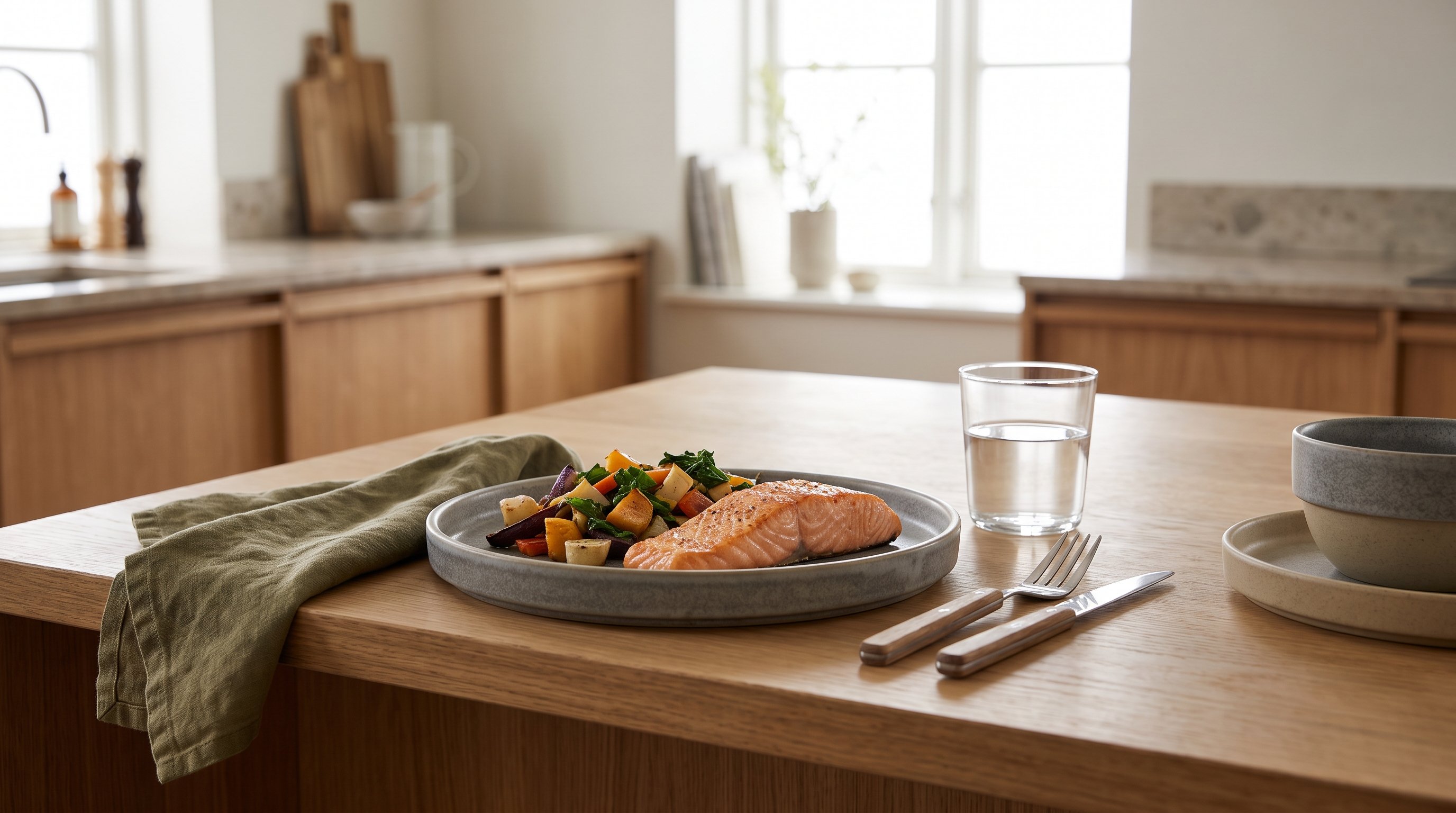
- Lunch - mixed leaves, chickpeas, olive oil dressing, and a piece of oily fish
- Snack - a handful of walnuts or a piece of fruit
- Dinner - a vegetable-heavy stir fry with brown rice and a side of greens
- Drink - water through the day, with herbal tea as an option in the evening
None of this is restrictive, and there's room to swap any item for something you already like in the same food group.
How Many Anti Inflammatory Swaps You Actually Need
Starting Small on Purpose
You don't need every meal to qualify as anti inflammatory from day one. A few consistent swaps across the week matter more than one perfect day followed by a return to old habits.
| Swap | How Often |
|---|---|
| Oily fish | 2 times a week |
| Leafy greens | Most days |
| Nuts or seeds | Daily handful |
| Refined sugar | Cut back gradually |
| Water over sugary drinks | Daily default |
Pick two rows from that table to start with this week, and leave the rest until the first two feel automatic.
Why Small Swaps Beat a Strict Elimination Plan
A strict elimination diet cuts out whole food groups overnight and asks you to track everything you eat against a long list of rules.
It can work for a week or two, but most people find it hard to sustain once normal life gets in the way - work lunches, family meals, travel.

Small, repeatable swaps don't ask you to be perfect, so they survive the busy weeks that derail stricter plans.
The maths is simple: a diet you follow at sixty percent consistency for months beats one followed at a hundred percent for two weeks and then abandoned.
Making Anti Inflammatory Eating Fit a Real Schedule
The food side is only half the picture - how you move and recover during the day plays into how you feel too.
Keeping track of simple daily habits like water intake and step goals, alongside the food swaps, makes it easier to see what's actually happening day to day rather than guessing.
Nord Fascia's habit trackers let you log hydration and daily movement in one place, so the food changes sit alongside the rest of your routine instead of becoming one more thing to remember separately.
Who This Way of Eating Suits and How to Adjust It
If You're Completely New to This
Start with the two easiest swaps from the earlier table - water over sugary drinks and a daily handful of nuts. Both fit into any existing routine without needing a shopping list overhaul.
If Your Week Is Packed
Batch-cook one vegetable-heavy dish on a quieter day and reuse it across two or three meals. The goal is fewer decisions, not more cooking.

If You're Older or Managing Joint Stiffness
The same food swaps apply, just paired with gentler expectations around pace - speak to a clinician if you have existing conditions that affect your diet before making bigger changes. Small, steady adjustments tend to suit this group better than sudden shifts.
If You're Cooking for a Family
Build meals around a shared base - a tray of roasted vegetables, a pot of beans - and let individual plates vary from there. Nobody needs to eat an identical meal for the household to benefit.
What to Expect in the First Few Weeks
Don't expect a dramatic shift in how you feel within the first few days - this is a pattern that builds quietly over time, not a quick fix.
Most people find the swaps start to feel normal somewhere around the point where they stop having to think about them, which varies from person to person.
The weeks where people usually drop off are the ones where motivation was doing all the work - once the first wave of enthusiasm fades, having a simple, repeatable structure matters more than willpower.
Pairing an Anti Inflammatory Diet With Nord Fascia
Food swaps work best alongside a body that's also moving well, since stiffness and poor mobility can make it harder to stay active and consistent.
Nord Fascia offers short guided exercises for fascia release and mobility, plus lifestyle challenges and a curated article library, so the eating side of things doesn't have to carry the whole routine on its own.
None of it needs a gym, restrictive diets, or exhausting workouts - just short sessions that fit around a day you already have, alongside the food changes covered above.
Release Tension Naturally
Move With Ease Again
Carrying These Swaps Into an Ordinary Week
Pick one swap from the earlier table, write it somewhere you'll see it, and let it run for a week before adding another.
Pairing that with Nord Fascia's trackers and short mobility sessions gives you a simple way to see the whole picture - food, water, and movement - without turning any of it into a strict rulebook.
FAQ
There's no fixed timeline, and it varies from person to person depending on where you're starting from. Staying consistent with a few swaps over time matters more than watching for a specific date.
No - an all-or-nothing approach is exactly what tends to fail. Starting with one or two swaps and building from there is more realistic for most people.
Batch-cooking one or two simple dishes on a quieter day covers several meals without extra daily effort. Even small swaps, like choosing water over a sugary drink, count without any cooking at all.
Diet is one part of the picture, and staying mobile plays a role in how you feel day to day as well. Nord Fascia pairs short guided mobility sessions with habit trackers, so food and movement can sit in the same routine instead of being handled separately.
Share this post