Foods for Healthy Skin: Whole Foods or Supplements First?
By:Author:Nord Fascia Editorial
Updated on:October 16, 2026
- Building a Skin-Friendly Plate Step by Step
- How Often Skin-Supporting Foods Should Show Up
- Fitting Skin-Supporting Meals Into a Busy Week
- A Four-Week Way to Start Eating for Skin
- What to Expect As Eating Habits Settle In
- Mistakes That Quietly Undercut Skin-Supporting Eating
- Supporting Skin-Friendly Habits With Nord Fascia
- Making Skin-Supporting Food Choices Stick
Whole foods are the better starting point for skin health, because they bring fats, vitamins and water together in a form your body already knows how to use. Supplements can fill specific gaps, but they can't replace a plate of food doing several jobs at once.
Skin is built and repaired from the nutrients you take in day after day - fats for the barrier, protein for structure, water for plumpness, and a mix of vitamins and minerals that support the process underneath. None of this happens overnight, and none of it comes from a single meal or pill.
This guide covers how much to eat and how often, a simple four-week way to start, where people usually lose momentum, and how daily movement habits can sit alongside better eating.
Building a Skin-Friendly Plate Step by Step
You don't need to overhaul your kitchen to eat in a way that supports your skin. A few repeatable habits do most of the work.

Steps to Build a Skin-Supporting Plate
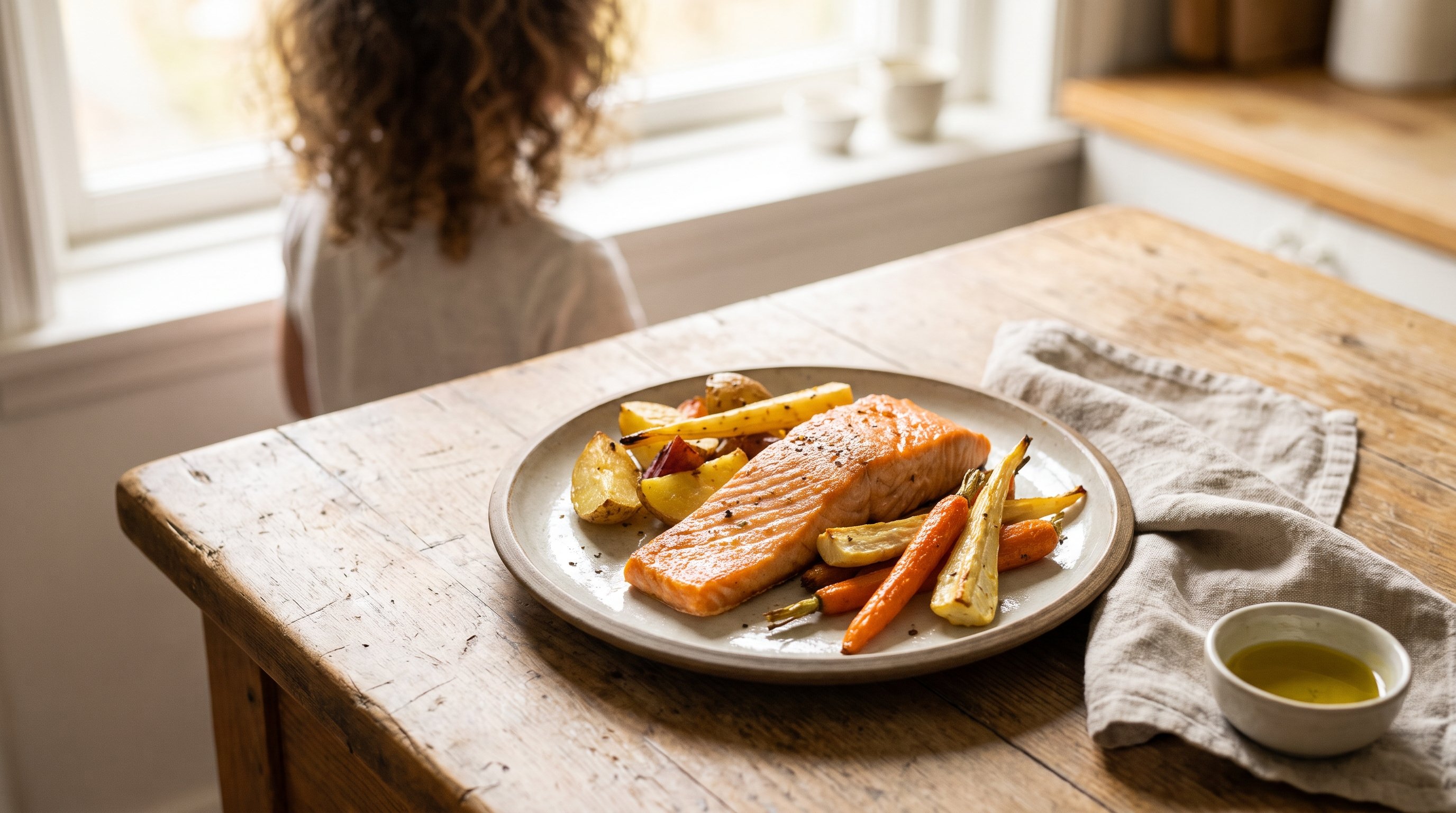
- Add a source of healthy fat to most meals - oily fish, nuts, seeds or olive oil help maintain the skin's barrier.
- Include a protein portion at each meal - eggs, fish, beans or poultry give your body the building blocks skin needs to repair.
- Fill half the plate with vegetables and fruit - these bring vitamins and water content that plain starches don't.
- Drink water through the day rather than in one go - steady hydration supports skin that looks and feels less dry.
- Cut back on heavily processed snacks gradually - swap one at a time rather than removing everything at once.
- Keep a regular meal rhythm - skipping meals and then overeating later makes it harder to eat consistently well.
- Notice how your skin responds over weeks, not days - small adjustments add up slowly.
How Often Skin-Supporting Foods Should Show Up
A Simple Weekly Guide
Rather than counting grams, it helps to think about how often different food groups turn up across your week.
| Food Group | How Often | Role |
|---|---|---|
| Oily fish | Two times weekly | Supports skin barrier fats |
| Leafy greens | Most days | Brings vitamins and water |
| Nuts and seeds | Daily small handful | Steady healthy fats |
| Water | Through the day | Supports skin hydration |
| Processed snacks | Occasional, not daily | Less reliance over time |
There's no single magic number here - consistency across the week matters more than any one meal being perfect.
Fitting Skin-Supporting Meals Into a Busy Week
Most weeks don't go to plan. Meetings run long, groceries run out, and the easiest food is rarely the most skin-friendly option.
A workable approach is to keep two or three go-to meals that already fit the pattern above, so you're not improvising on a tired evening.

This is also where habit tools help - Nord Fascia's daily trackers let you log water and simple wellness routines alongside your meals, so the eating side of things doesn't sit separately from everything else you're trying to build.
Pairing food habits with movement and hydration tracking in one place makes the whole picture easier to see at a glance.
A Four-Week Way to Start Eating for Skin
Here's a simple order to work through rather than trying to change everything on day one.
| Stage | Focus |
|---|---|
| Week 1 | Add a fat source daily |
| Week 2 | Build in two oily fish meals |
| Week 3 | Increase vegetables at main meals |
| Week 4 | Steady hydration through the day |
What to Expect As Eating Habits Settle In
Skin changes slowly, because it's constantly rebuilding itself in the background rather than responding to any single day of eating.
Early weeks are mostly about building the habit itself - getting the fish into the trolley, the greens onto the plate, the water bottle refilled without thinking about it.
Be patient with timing and focus on whether the habit is sticking, not on how your skin looks after a week or two.
Mistakes That Quietly Undercut Skin-Supporting Eating
Chasing One Superfood
Pinning hopes on a single ingredient ignores the fact that skin relies on a mix of fats, protein, vitamins and water working together.
Cutting Out Fat Entirely
Fat is part of the skin's barrier, so removing it completely tends to backfire rather than help.
Forgetting Water
Food gets the attention, but steady hydration through the day matters just as much as what's on the plate.
Expecting Fast Change
Skin takes time to show any shift, so checking in the mirror daily usually just leads to frustration.
Relying Only on Supplements
A pill can fill a specific gap, but it can't replicate the combination of nutrients a varied plate provides.
Supporting Skin-Friendly Habits With Nord Fascia
Eating well is one half of supporting how your skin looks and feels, and movement is the other.
Nord Fascia offers hundreds of short guided exercises aimed at fascia release and mobility, which can support smoother-looking skin and a reduced appearance of cellulite alongside the food choices covered above.
The app also includes lifestyle challenges and a specialist-curated article library, so the eating habits in this guide sit next to practical routines rather than standing alone.
Release Tension Naturally
Move With Ease Again
Making Skin-Supporting Food Choices Stick
Pick one habit from this guide - two fish meals a week, or a steady water routine - and give it a proper run before adding another.
Small, repeated choices do more for your skin over time than any single dramatic change, and pairing them with Nord Fascia's trackers can help keep the habit visible day to day.
FAQ
Whole foods support the fats, protein and hydration that skin relies on to repair itself. The effect builds gradually through consistent eating rather than showing up after one meal.
A supplement can cover a narrow gap, but it can't replace the combination of nutrients and water a varied plate provides. Whole foods also bring fibre and other compounds that pills don't include.
Start with one small swap, like adding a handful of nuts or an extra glass of water, rather than rebuilding every meal. Nord Fascia's habit trackers can help you keep that one change visible until it's automatic.
Skin renews itself slowly, so a few weeks of better eating is often still early days. Keep the habit going and speak to a clinician if you notice any skin change that concerns you.
Share this post