Foods for Muscle Recovery: Simple Meals Versus Strict Tracking
By:Author:Nord Fascia Editorial
Updated on:October 16, 2026

- No Single Food Will Fix Sore Muscles Overnight
- What Actually Happens Inside a Recovering Muscle
- Three Things That Decide How Well You Recover
- A Day of Eating Built Around Muscle Recovery
- Fitting Recovery Meals Into a Normal Week
- When Muscle Soreness Should Actually Ease Up
- Mistakes That Quietly Slow Down Muscle Recovery
- Building Foods for Muscle Recovery Into a Nord Fascia Routine
- Turning Recovery Meals Into Something You Keep Doing
Foods for muscle recovery work by giving the body the raw materials it needs to repair tissue and restock energy, and simple repeated meals do that job just as well as strict tracking apps for most people.
Muscle recovers through a few basic processes: protein rebuilds fibres, carbohydrate refills the fuel tank, and fluid plus minerals help muscles contract properly again.
This guide covers the myth around 'magic' recovery foods, how the process actually works, what changes the result, a sample day of eating, common mistakes, and how to build a routine that sticks.
No Single Food Will Fix Sore Muscles Overnight
There's no single food, shake or supplement that erases soreness the next morning, and no food targets one muscle group over another.
The body does not know which muscle to prioritise when you eat a specific ingredient - nutrients go wherever they're needed most, not to the area you trained hardest.
The real answer is less exciting but more useful: consistent meals with enough protein, carbohydrate and fluid, spread across the day, give the body what it needs to repair itself at its own pace.
What Actually Happens Inside a Recovering Muscle
Recovery isn't one event - it's a handful of separate jobs happening at once, each needing a different kind of fuel.
Protein Rebuilds the Fibres
Exercise creates tiny amounts of stress in muscle fibres, and protein from food supplies the amino acids the body uses to repair and strengthen that tissue over time.
Carbohydrate Restocks the Fuel
Muscles store energy as glycogen, and that store gets used up during activity, so eating carbohydrate afterwards helps refill it so the next session doesn't start running on empty.
Fluid and minerals like sodium and potassium matter too, since muscles need them to contract and relax properly, and both get lost through sweat.
Three Things That Decide How Well You Recover
Not every factor matters equally - some have a far bigger effect on how you feel and perform the next day.
What Moves the Needle Most
- Total protein across the day - spreading protein over three or four meals matters more than any single post-workout meal.
- Enough total food - under-eating slows repair regardless of how well the individual meals are balanced.
- Sleep and consistency - the same meals repeated week after week beat an occasionally perfect plate that's hard to keep up.
A Day of Eating Built Around Muscle Recovery
There's no need to track every gram - here's a simple structure anyone can copy and adjust to taste.
A Simple Recovery Day
- Breakfast - eggs with wholegrain toast and fruit, giving protein and carbohydrate early.
- Lunch - chicken, fish or beans with rice or potatoes and a generous side of vegetables.
- Post-activity snack - yoghurt with oats or a glass of milk, something quick and easy to digest.
- Dinner - lean meat or tofu with pasta or grains, plus water through the evening to replace fluid lost during the day.
None of this requires special products - it's food most people already have in the kitchen, just arranged with a bit of intention.
Fitting Recovery Meals Into a Normal Week
The hardest part of eating for recovery isn't knowing what to eat - it's doing it on a Tuesday when you're tired and the fridge is half empty.
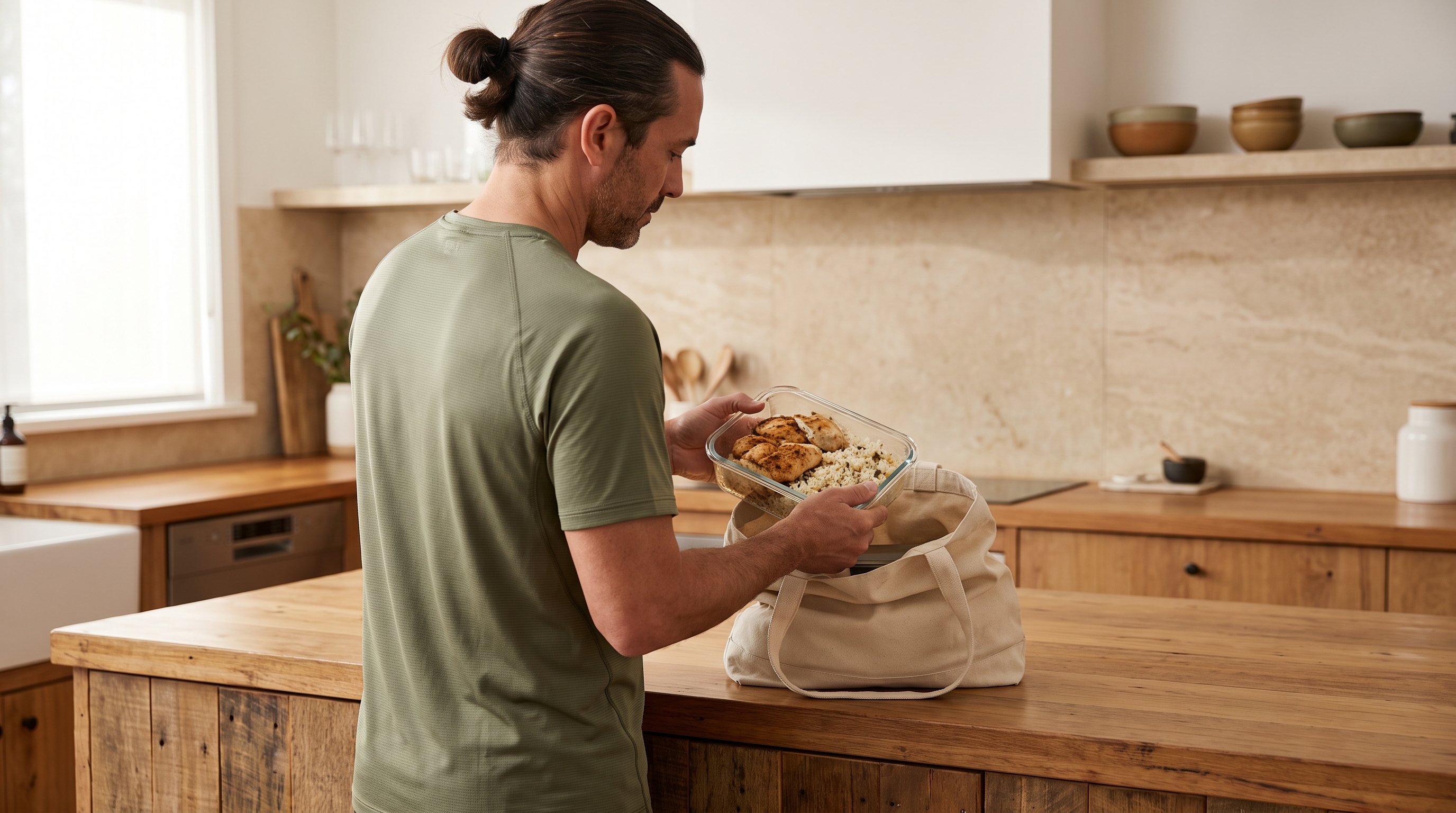
Batch-cooking a protein and a carbohydrate at the start of the week, then mixing them with whatever vegetables are around, removes most of the daily decision-making.
Nord Fascia's habit trackers can help here, letting you log water, meals and movement in one place so the eating side of recovery doesn't get forgotten once the stretching or mobility work is done.
When Muscle Soreness Should Actually Ease Up
Soreness from a new or harder session tends to settle within a few days as the body adapts, though this varies a lot from person to person and depends on how new the activity is.
Eating well doesn't speed this up dramatically on its own, but it does stop poor fuelling from making recovery harder than it needs to be.
If soreness is sharp, doesn't ease over time, or feels like joint pain rather than muscle fatigue, it's worth speaking to a clinician rather than trying to eat your way through it.
Mistakes That Quietly Slow Down Muscle Recovery
Skipping Meals After Training
Waiting too long to eat after a hard session can leave the body short on the materials it needs - a simple snack soon after activity, followed by a proper meal, closes that gap.
Chasing One 'Perfect' Food
Relying on a single supplement or ingredient and ignoring the rest of the day's meals misses the point - total intake across the day matters far more than any one food.

Under-Eating Overall
Cutting portions too hard while training often works against recovery - the fix is eating enough total food, not eating 'perfectly'.
Forgetting Fluid
Focusing only on food and ignoring water or electrolytes can leave muscles working below their best - keeping a water bottle nearby through the day is a simple fix.
Abandoning the Plan After One Bad Day
One missed meal or one takeaway dinner doesn't undo progress - the next meal is simply the next chance to get back to the normal pattern.
Building Foods for Muscle Recovery Into a Nord Fascia Routine
Eating well for recovery works best alongside movement that actually helps muscles and fascia loosen up rather than staying tight and sore.
Nord Fascia pairs guided fascia release sessions with daily trackers for hydration, steps and wellness habits, so eating patterns and movement habits sit in the same place instead of being managed separately.
The app's exclusive article library and lifestyle challenges can also help keep recovery habits - eating, moving, and stretching - feeling like one routine rather than three separate chores.

Release Tension Naturally
Move With Ease Again
Turning Recovery Meals Into Something You Keep Doing
The best approach to foods for muscle recovery isn't the strictest one - it's the one simple enough to repeat without thinking too hard about it.
Pick a handful of meals that cover protein, carbohydrate and fluid, rotate them through the week, and let Nord Fascia handle the tracking side so the focus stays on consistency rather than counting.
FAQ
No - whole foods like eggs, chicken, fish, beans and dairy provide the same protein building blocks as a shake. A shake can be convenient, but it isn't required for muscle repair to happen.
For most people, no - eating a source of protein at each meal gets you most of the benefit without the daily admin. Strict tracking can help in specific situations, but it isn't necessary for general recovery.
A simple snack like yoghurt, a piece of fruit, or a sandwich bridges the gap until a proper meal is possible. Nord Fascia's trackers can be a quick way to log these smaller moments so they don't get forgotten.
Strict plans often feel exciting at first and then become tiring to maintain, which is why repeatable, boring-on-purpose meals tend to last longer. Keeping a short rotation of easy meals removes the daily decision that usually causes people to give up.
Share this post