How to Reduce Cellulite Naturally: Realistic Daily Routines
By:Author:Nord Fascia Editorial
Updated on:October 16, 2026

- Can You Actually Reduce How Cellulite Looks?
- Fascia Routines or Skin Creams: Which Actually Helps
- Why Daily Fascia Work Beats Occasional Intense Treatments
- Adjusting a Cellulite Routine to Fit Your Life
- Making This Routine Work Around a Normal Day
- No, You Cannot Spot-Target Cellulite Away
- Supporting a Natural Cellulite Routine With Fascia Release
- Keeping a Cellulite Routine Going Past the First Week
The honest answer: you cannot erase cellulite, but you can influence how the skin above it looks through circulation, muscle tone, and fascia mobility over time. Cellulite is normal tissue structure, not a flaw to fix overnight.
It happens where fat sits close to the skin and connective bands (fascia) pull down on the skin while fat pushes up between them, creating that dimpled look. Loosening tight fascia, moving more, and keeping skin and muscle in good condition can soften the appearance, though the underlying structure stays largely the same.
This guide covers what actually changes the look of cellulite, what a realistic daily routine involves, where the easier path beats the harder one, and how to fit any of this into a normal week.
Can You Actually Reduce How Cellulite Looks?
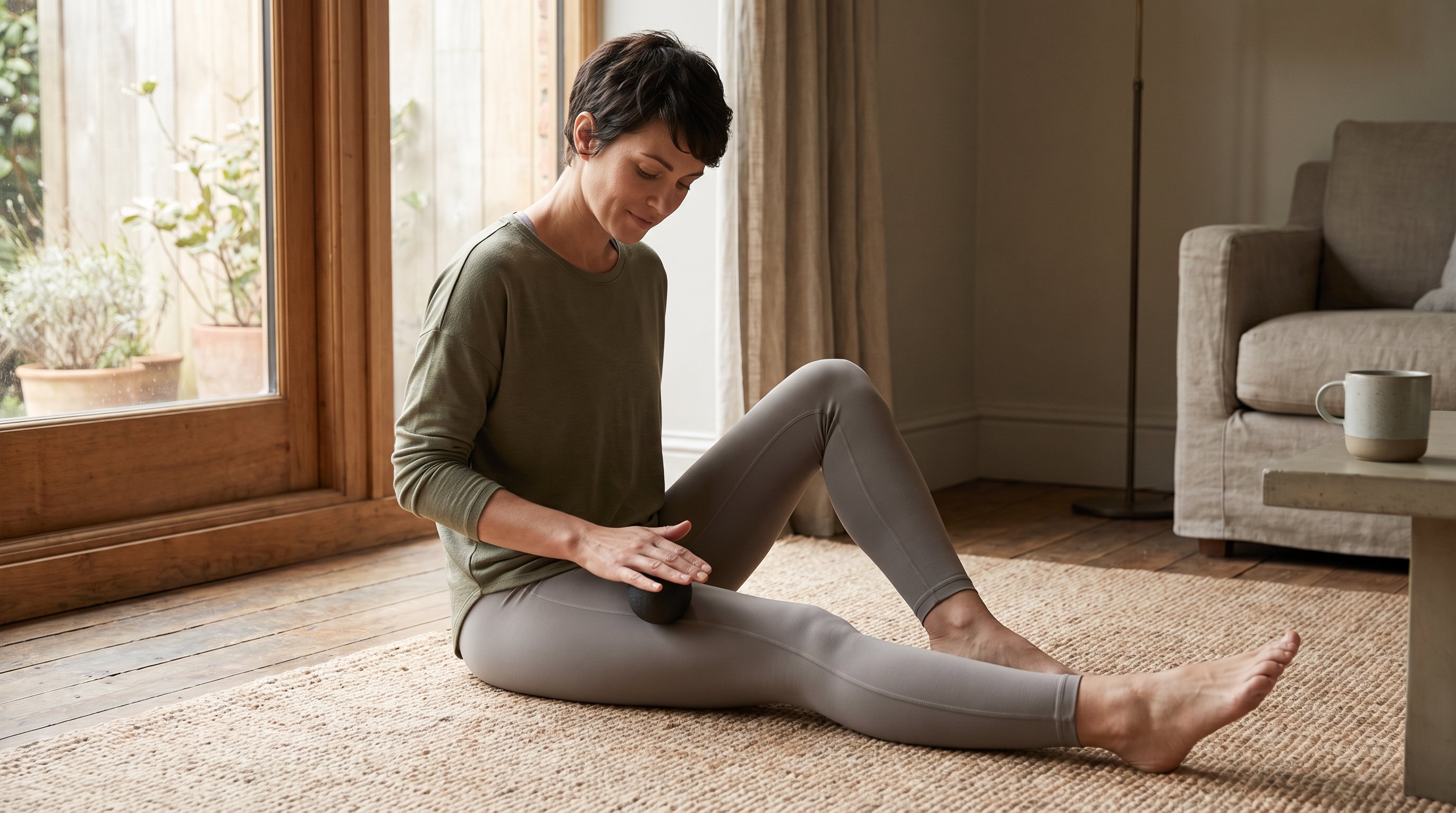
Here is the mechanism: fascia is the connective tissue that wraps your muscles and sits just under your skin, and when it gets tight or stick, it pulls unevenly on the skin above it.
Loosening that tissue through movement and gentle release work, combined with toning the muscle underneath, can smooth out some of that unevenness. Fat distribution and skin thickness still play a part, and those don't change through fascia work alone.
The Honest Arithmetic
If you do five minutes of fascia-focused movement most days, that's roughly 30 to 35 minutes a week, which is a small but repeatable amount of input. Small repeated input is what changes tissue quality over months, not a single intense session.
Nobody can promise a specific result on a specific date, and anyone who does is guessing. What's realistic is steadier skin tone and less stiffness in the areas you work on, built up slowly.
Fascia Routines or Skin Creams: Which Actually Helps
Most people weighing this up are choosing between two routes: topical creams marketed at cellulite, or a consistent routine of movement and fascia release.
Creams sit on the surface of the skin and cannot reach the fascia or muscle layer underneath, so their effect is limited to temporary skin feel. Movement and fascia release work on the layer that's actually involved in the dimpled appearance, which is why the comparison below focuses on what each approach can realistically touch.
| Approach | What It Reaches | Effort Needed | Cost Over Time |
|---|---|---|---|
| Topical cream | Skin surface only | Low | Ongoing repurchase |
| Fascia release movement | Fascia and muscle layer | Low to moderate | One-time or app-based |
| Dry brushing | Skin surface, circulation | Low | Low, reusable tool |
| Strength training | Muscle tone under skin | Moderate | Free to moderate |
| Hydration and whole foods | Skin and tissue quality | Low, habit-based | Normal food budget |
None of these replace the others entirely, and most realistic routines combine two or three from this list rather than relying on just one.
Why Daily Fascia Work Beats Occasional Intense Treatments
The harder alternative here is the occasional intense approach: a deep tissue massage once a month, or a long gym session you dread and skip half the time.
The easier route is five to ten minutes most days of guided movement that targets fascia and circulation. Short daily sessions are easier to actually finish, and finishing is what makes any routine add up over weeks instead of staying a one-off.
Consistency is unglamorous and it wins anyway. A once-a-month deep session might feel more dramatic in the moment, but it doesn't give the tissue the repeated signal that daily movement does.
Adjusting a Cellulite Routine to Fit Your Life
If You're Just Starting Out
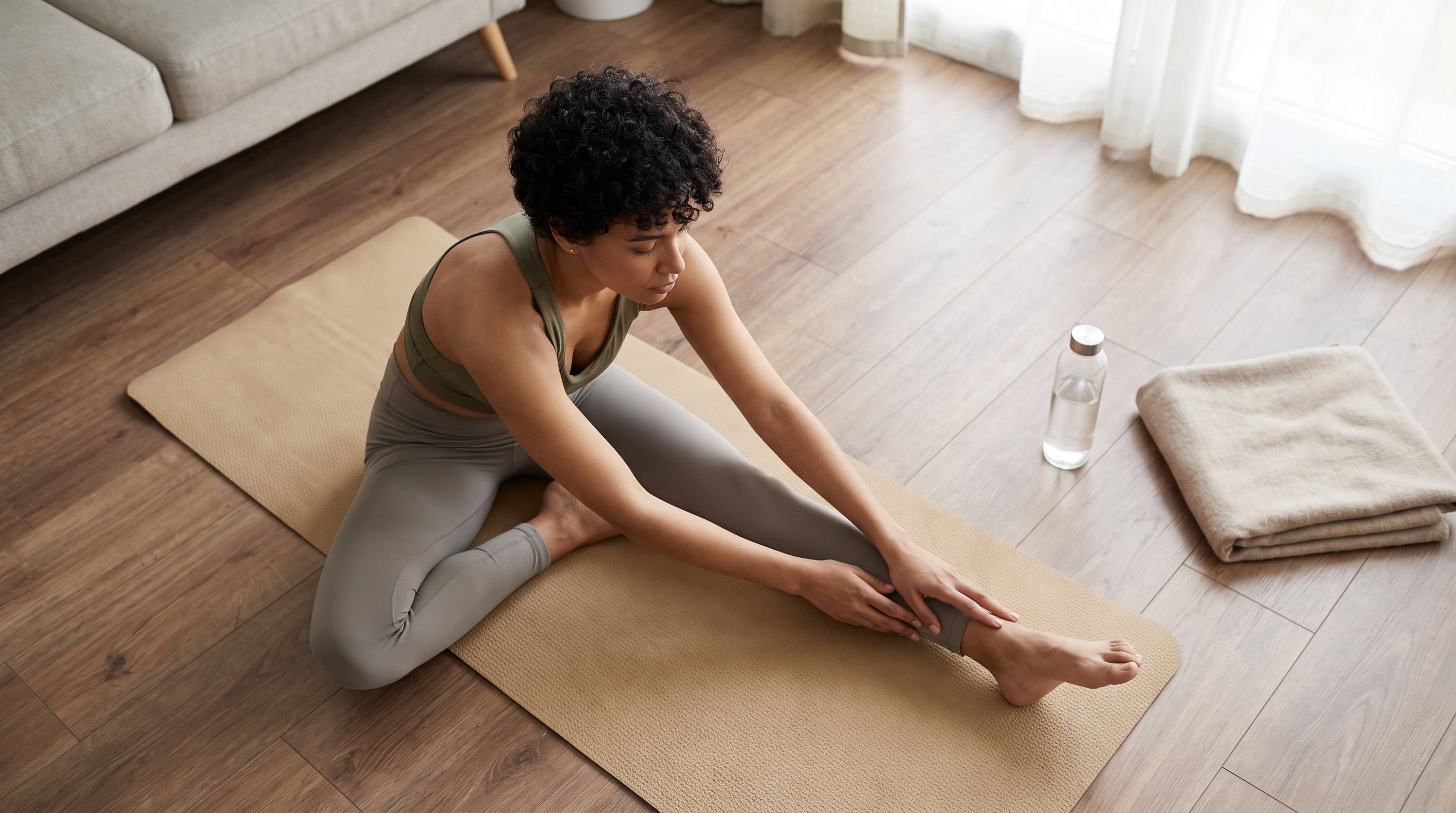
Start with short, gentle fascia release sessions and basic stretching rather than jumping into intense workouts. The goal early on is building the habit, not pushing intensity.
If Your Week Is Already Packed
Short guided sessions of five to ten minutes fit into a lunch break or before bed without needing a gym. Attaching the habit to something you already do, like after brushing your teeth, makes it easier to remember.
If You're Managing Joint or Mobility Concerns
Gentle, guided movement that avoids strain is usually more sustainable than high-impact routines. Speak to a clinician if you have persistent pain or a condition that affects how you move, before starting any new routine.
If You've Tried Before and Stopped
The usual reason routines stall is expecting fast change and giving up when the mirror looks the same after two weeks. Tracking small habits like hydration and movement, rather than watching for a visible result, tends to keep people going longer.
Making This Routine Work Around a Normal Day
None of this needs a block of free time you don't have. A short session before work, one after lunch, or a few minutes while watching something in the evening covers most of what's useful here.
Keeping track of water, steps, and whether you did your session that day is where a lot of people lose the thread, simply because there's nothing to glance at.
This is where Nord Fascia fits in: it keeps guided fascia release sessions, hydration tracking, and daily habit trackers in one place, so you're not trying to remember five separate things.
The sessions are short by design, built around fascia release and mobility rather than exhausting workouts, which matches the low-effort, repeatable approach this whole guide is built on.
No, You Cannot Spot-Target Cellulite Away
The myth worth addressing directly: no exercise, cream, or routine targets fat or tissue in one specific spot. The body doesn't work that way, and anything claiming to melt cellulite off your thighs specifically is overstating what's possible.
What actually happens is broader: your body changes fat storage and tissue tone across the whole body based on overall activity, hydration, and muscle condition, not based on where you focus your attention.
Fascia release and movement in a specific area can improve how that area's skin and tissue feel and look over time, which is different from targeting fat loss there. That distinction matters, because expecting spot reduction is the fastest way to feel like nothing is working.
Supporting a Natural Cellulite Routine With Fascia Release
A routine only works if it's easy enough to repeat, and that's the gap Nord Fascia is built to close.
Nord Fascia offers hundreds of short guided exercises focused on fascia release, mobility, and tone, plus daily trackers for hydration, steps, and routines, and challenges that nudge small lifestyle changes along the way. There's no gym requirement, no restrictive diet, and no exhausting workout plan attached to any of it.
It also includes a specialist-curated article library and audio and video content, so the guidance sits alongside the exercises instead of leaving you to figure out the rest on your own.
Release Tension Naturally
Move With Ease Again
Keeping a Cellulite Routine Going Past the First Week
The one concrete step worth taking today is picking a five-minute slot you already have, lunch break, before bed, after the school run, and attaching one short fascia release session to it.
Do that most days rather than perfectly every day, and give it weeks rather than days before judging it. Nord Fascia can hold the sessions and the tracking side of that so the only thing you need to bring is the five minutes.
FAQ
It can improve how the skin looks by addressing fascia tightness, circulation, and muscle tone, but it doesn't remove the underlying tissue structure. Think of it as softening the appearance over time rather than eliminating it.
Creams only reach the skin surface, while fascia-focused movement works on the connective tissue layer that's actually involved in the dimpled look. Neither route changes things quickly, but one is working on the layer that matters more.
Five to ten minutes fits into most days without needing a gym or special equipment, and Nord Fascia's sessions are built to be that short. Attaching the habit to something already in the day, like after breakfast, removes the need to find extra time.
Most people expect a visible change fast and stop when the mirror looks the same, even though tissue and skin tone shift slowly over a longer stretch of time. Tracking the habit itself, rather than watching for a result, tends to keep people going past that drop-off point.
Share this post