Beginner Stretching Routine: A Simple Daily Guide to Start
By:Author:Nord Fascia Editorial
Updated on:September 30, 2026
- Does a Beginner Stretching Routine Actually Work?
- Why This Beats the Harder Alternative
- How Much Stretching Do Beginners Actually Need?
- The Practical Question: Where Do You Actually Start?
- Comparison: Stretching Alone vs a Guided Routine
- The Forbidden Promise, Answered Honestly
- Levers That Change the Result
- How Long Until You See Results?
- Your First Four Weeks of Stretching
- What Stalls Progress
- Why Nord Fascia Works for This
- Final Thoughts
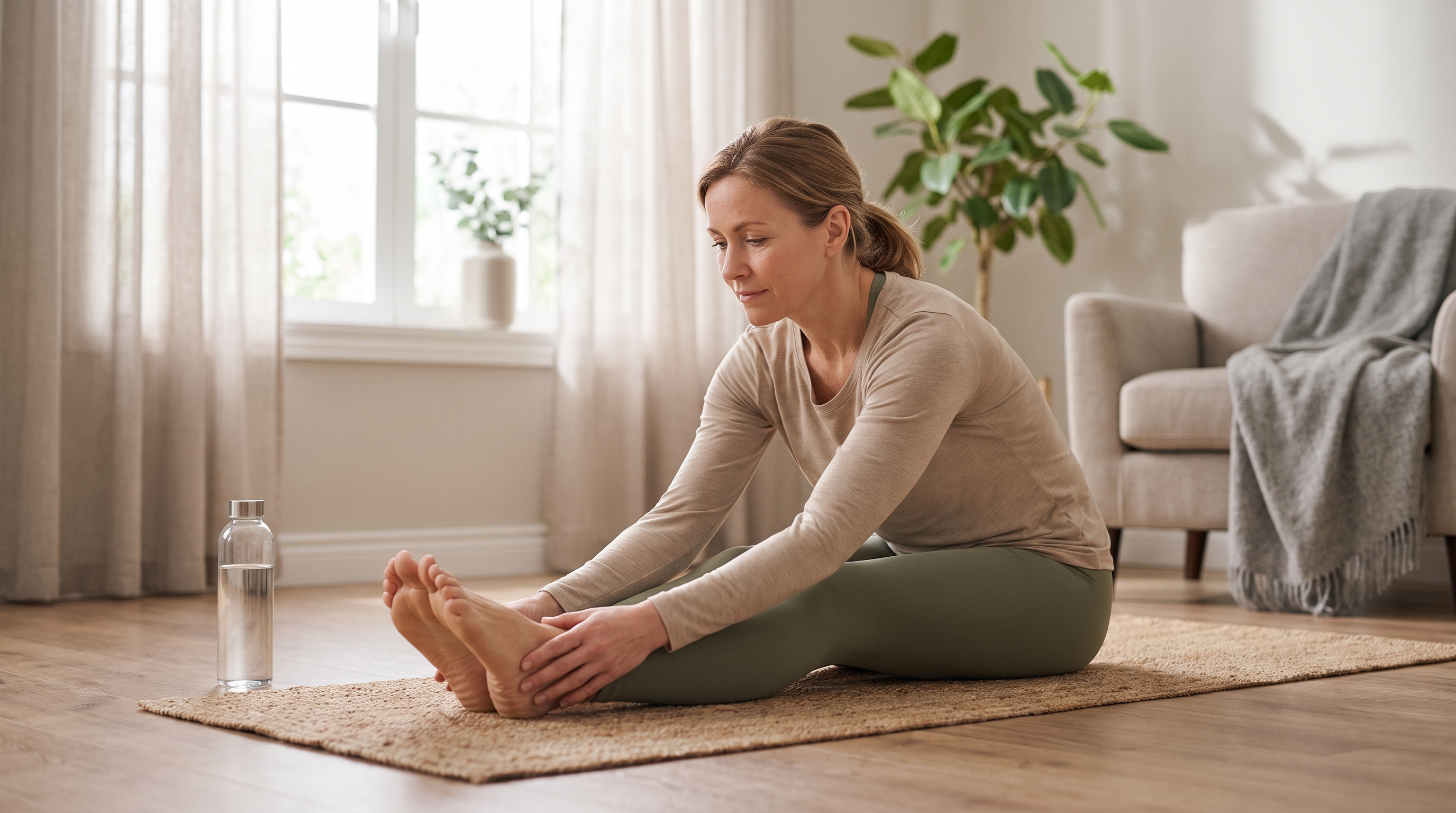
A beginner stretching routine only needs about 10 minutes a day, a handful of moves, and somewhere to sit or stand comfortably. That's the whole entry fee - no equipment, no class, no flexibility you don't already have.
Stiffness usually isn't a strength problem. It's more often a fascia and habit problem - tissue that's tightened from sitting, repetitive movement, or just not being asked to stretch in a while, plus nobody ever taught most people how to do this properly.
This guide covers whether stretching actually does anything, how much you need, what a first month looks like, and where most beginners quietly give up.
Does a Beginner Stretching Routine Actually Work?
Stretching works on a simple mechanism - it asks muscle and the fascia around it to lengthen under gentle, sustained tension, which over repeated sessions changes how far a joint comfortably moves.
It doesn't rebuild tissue overnight and it doesn't fix a joint problem. What it does is train your nervous system to tolerate a bigger range of motion, and it trains the fascia to glide instead of stick.
Do the arithmetic: 10 minutes a day is about 70 minutes a week. Compare that to the hours most people spend sitting or repeating the same posture, and it's easy to see why a small, consistent dose can shift how a joint feels even though it's a fraction of your day.
If a stretch produces sharp pain, numbness, or pain that spreads down a limb, that's not a stretching problem to push through - speak to a clinician if that happens.
Why This Beats the Harder Alternative
The harder alternative is an intense mobility session you dread, skip, and eventually abandon. A beginner stretching routine wins because it's boring in the best way - short, repeatable, and easy to say yes to on a bad day.
Adherence beats intensity almost every time. Ten minutes done five days a week adds up to 50 minutes; one heroic 45-minute session you only manage once a month adds up to less and leaves you stiffer in between.

Consistency is unglamorous and it wins anyway. The routine that survives a busy week is the one that was never designed to be impressive in the first place.
How Much Stretching Do Beginners Actually Need?
Most beginners overestimate how much stretching is needed and underestimate how often. A handful of stretches held for 20-30 seconds each, done most days, beats one long session done rarely.
Find Your Own Number
Start with the areas that feel tightest - often the neck, hips, or hamstrings - and build from there rather than trying to cover every joint on day one.
Use the table below as a starting point, then adjust the frequency to whatever you'll genuinely repeat.
| Area | Duration | Frequency |
|---|---|---|
| Neck and shoulders | 20-30 sec per stretch | Daily |
| Hips | 30 sec per side | 4-5x per week |
| Hamstrings | 20-30 sec per leg | 4-5x per week |
| Lower back | 20-30 sec per stretch | Daily |
| Ankles and calves | 20 sec per side | 2-3x per week |
The Practical Question: Where Do You Actually Start?
Knowing which stretches to do is one thing. Remembering to do them, in the right order, without guessing whether you're doing them well, is the part that trips most beginners up.
This is where a guided structure helps more than a printed list ever will. Guided fascia release sessions offer hundreds of short exercise routines built around mobility work, so you're following a clear sequence instead of improvising each morning.
It also keeps daily habit trackers for things like hydration and routine consistency, so a beginner routine doesn't quietly disappear after week one.
Comparison: Stretching Alone vs a Guided Routine
The real decision beginners face isn't whether to stretch - it's whether to freestyle it or follow something structured.
| Factor | On Your Own | Guided Routine |
|---|---|---|
| Getting started | Search and guess | Follow a set plan |
| Consistency | Easy to forget | Tracked daily |
| Variety | Same few moves | Hundreds of sessions |
| Progress check | Hard to measure | Built-in trackers |
| Time cost | Planning takes time | Ready to follow |
The Forbidden Promise, Answered Honestly
No, stretching your hips will not burn fat off your hips, and no stretch anywhere gives you overnight results. The body doesn't let you choose where it changes, and tissue doesn't rewrite itself in a single session.
What stretching honestly offers is easier movement, less stiffness, and a body that feels more comfortable to live in over time - not a cure, not a shortcut, just steady mechanical change.
Levers That Change the Result
Not every part of a stretching routine matters equally. These three levers do most of the work.
What Actually Moves the Needle
- Frequency over duration - stretching a little most days beats one long session a week, because the tissue gets repeated, gentle exposure instead of one shock.
- Consistent timing - attaching stretching to an existing habit, like after brushing your teeth, removes the decision of when to do it.
- Full range, not force - moving to a comfortable edge and holding it works better than forcing a deeper stretch than the tissue is ready for.
How Long Until You See Results?
This is where most beginners quit - somewhere in the second or third week, when the novelty has worn off and nothing feels dramatically different yet.
Stay vague on the calendar and honest about the process. Range of motion tends to shift gradually with repeated sessions, not on a fixed schedule, and the people who notice a difference are usually the ones who kept going through the flat-feeling weeks.
Your First Four Weeks of Stretching
The order below matters more than hitting a perfect number of minutes.
| Week | Focus |
|---|---|
| Week 1 | Learn 4-5 stretches well |
| Week 2 | Add daily consistency |
| Week 3 | Extend hold times slightly |
| Week 4 | Add new areas gradually |
By week four, the goal isn't flexibility gains - it's a routine that feels automatic rather than effortful.
What Stalls Progress
Skipping Days Without a Plan to Restart
One missed day turns into a week when there's no obvious re-entry point - pick a fixed time of day so restarting doesn't need a decision.
Forcing Depth Too Soon
Pushing into pain to look more flexible tightens the tissue further as a protective response - ease off to a comfortable stretch and let range build on its own.
Only Stretching One Area
Focusing only on the spot that feels tightest ignores how connected fascia is across the body - rotate through a few areas instead of fixating on one.
No Way to Track It
Without any record, it's easy to assume nothing's changing and quit - a simple daily tracker makes the pattern visible.
Treating It As Exercise Instead of Habit
Waiting for motivation to stretch means waiting a long time - anchoring it to an existing routine removes that dependency.
Why Nord Fascia Works for This
A beginner stretching routine falls apart most often from lack of structure, not lack of effort. Nord Fascia solves that by pairing guided fascia release sessions with progress trackers and lifestyle challenges, so the plan adapts as consistency builds instead of staying static.
Nord Fascia also includes audio and video sessions built to fit around an existing schedule, plus a specialist-curated article library to keep you informed along the way - no gym, no restrictive diets, no exhausting workouts required.
Release Tension Naturally
Move With Ease Again
Final Thoughts
A beginner stretching routine doesn't need to be complicated to work - a few minutes, most days, aimed at the areas that feel tightest, is enough to start changing how your body feels to move in.
If you want that structure built for you rather than pieced together yourself, Nord Fascia gives you the sessions, the tracking, and the reminders to keep it going.
FAQ
Yes - beginners with the least flexibility often notice the biggest shift in comfort, because there's more room for the tissue to adapt. Being stiff is the reason to start, not a reason to wait.
It might, if it depends purely on willpower with no structure behind it. Attaching it to a fixed time of day and tracking it daily is what actually keeps it going past week three.
A gentle pulling sensation is normal; sharp or spreading pain is not and means backing off. If discomfort persists beyond mild tightness, speak to a clinician rather than pushing through it.
Most people quit in the flat weeks when nothing feels different yet, or when life gets busy and there's no easy way back in. Guided session trackers and short sessions are built to make restarting after a missed day simple rather than discouraging.
Share this post