Desk Stretches: A Practical Guide To Moving Better At Work
By:Author:Nord Fascia Editorial
Updated on:October 16, 2026
- Can a Few Minutes of Stretching Undo Sitting All Day?
- Scattered Stretches or a Set Routine: Which Wins
- Why a Short Routine Beats Occasional Deep Stretching
- Matching These Movements to Your Working Day
- Making Office Movements Fit a Normal Workday
- No, These Movements Will Not Reshape Your Posture Overnight
- Building a Stretch Habit With Nord Fascia
- Turning a Stiff Desk Day Into a Better One
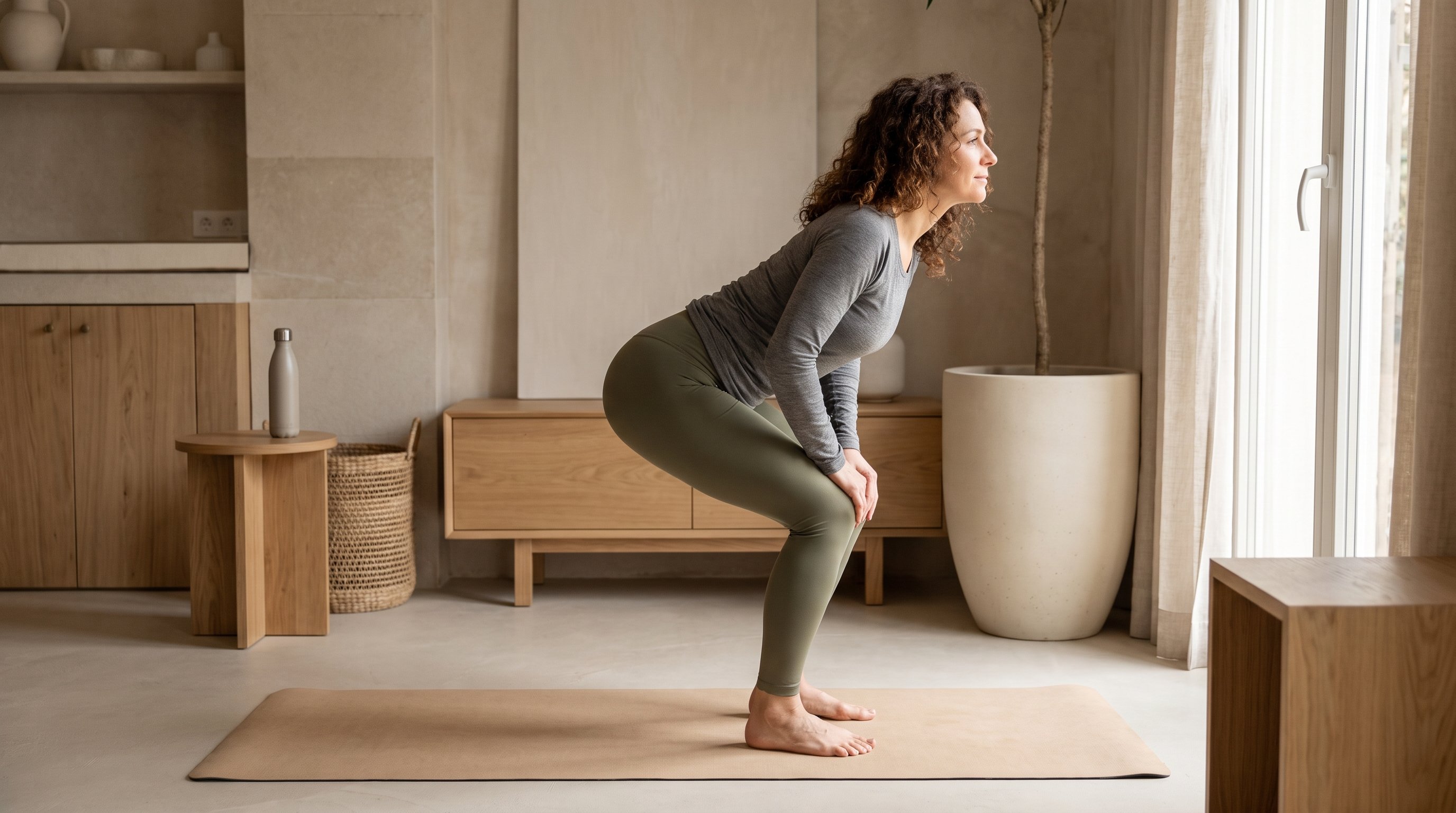
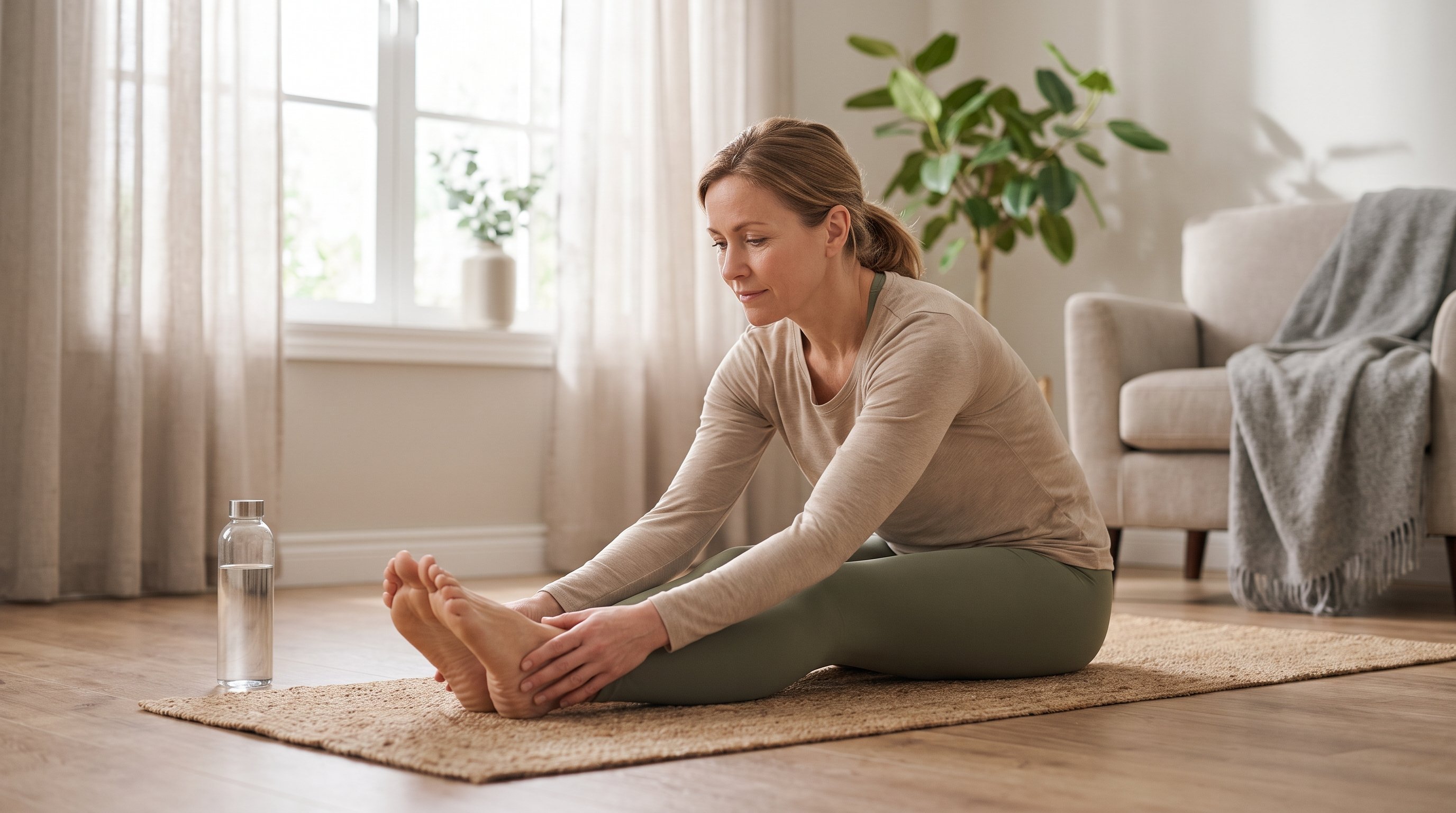
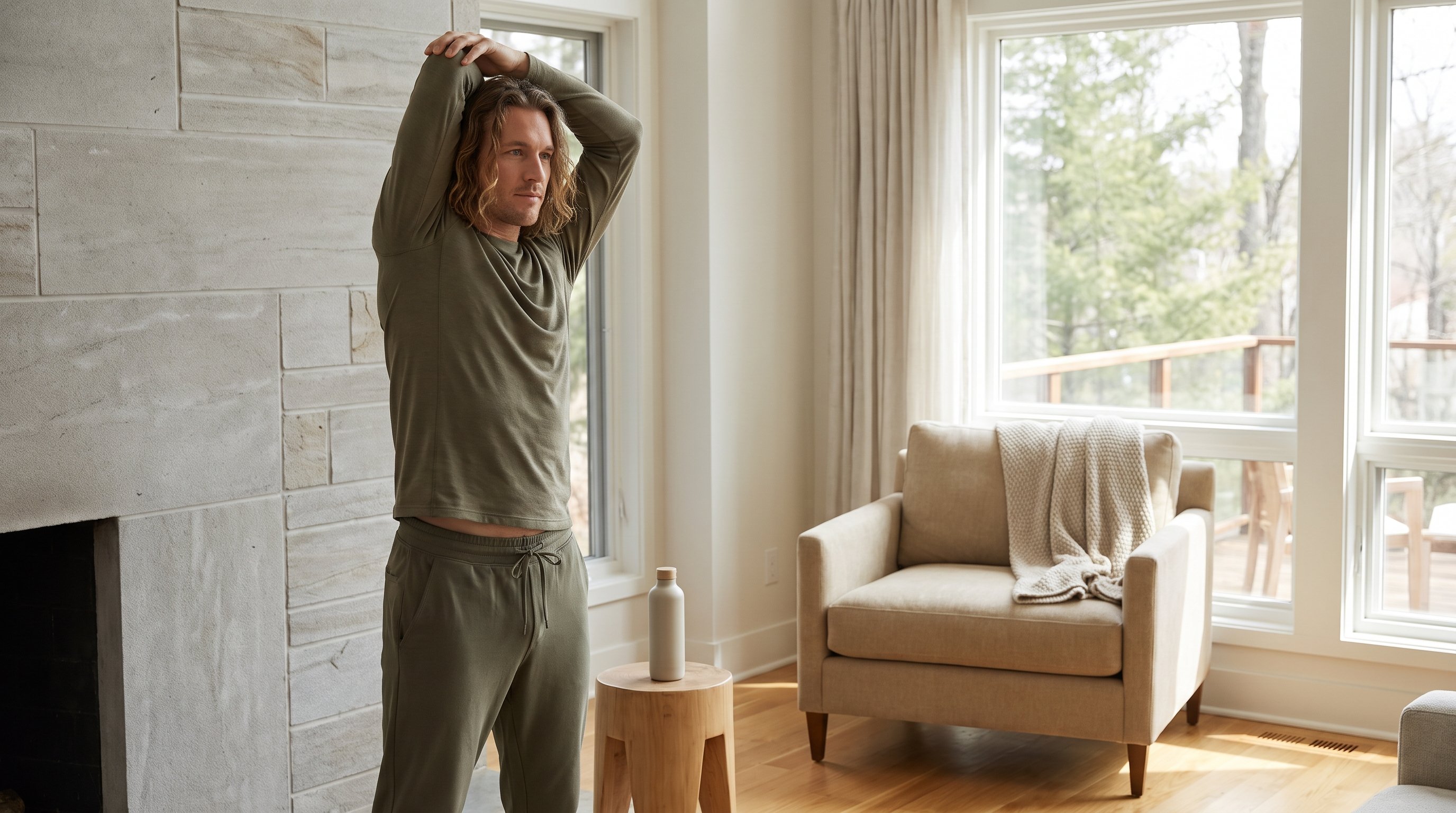
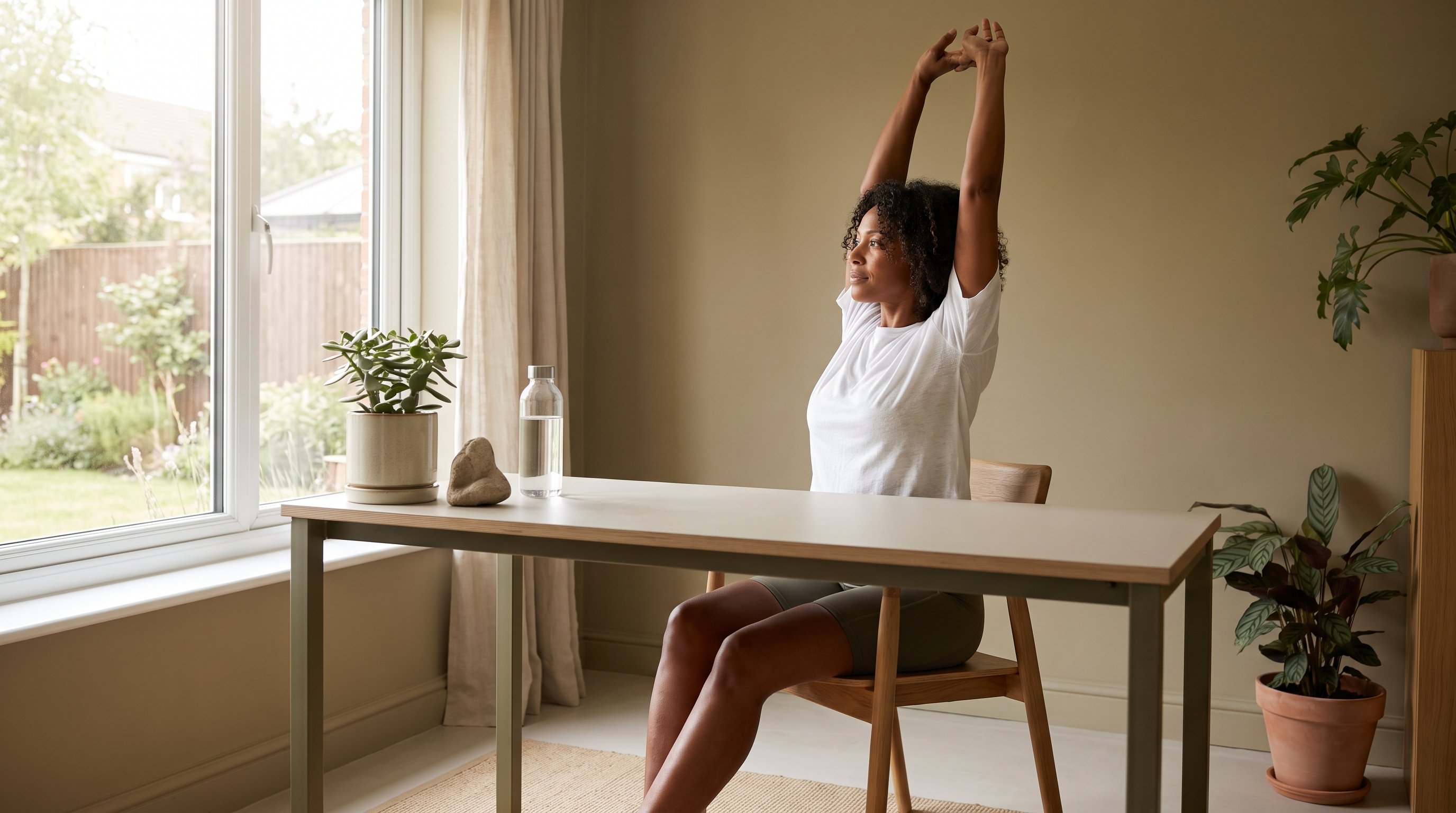
Desk stretches are short movements you do at or near your workstation to loosen tight hips, shoulders, neck and wrists after long stretches of sitting or typing. They do not erase hours of stillness, but they give your joints and fascia a chance to move through ranges they have been missing.
Sitting for long periods keeps muscles and the fascia around them in a shortened, compressed position. Movement, even brief movement, asks those tissues to lengthen again and lets your joints travel through their normal range instead of staying locked in one posture.
This guide covers whether these movements genuinely help, what the honest numbers look like, how they compare to a structured mobility routine, who they suit, and how to build the habit without turning your desk into a gym.
Can a Few Minutes of Stretching Undo Sitting All Day?
No single stretch undoes eight hours of sitting, and nothing claiming to do that is being straight with you. What workstation movements do is interrupt the pattern - they give stiff hip flexors, rounded shoulders and a tucked chin a short window to move the other way.
The mechanism is simple. Fascia and muscle adapt to the position you hold most, so if you sit for fifty minutes out of every hour, your body gets good at sitting and worse at standing tall or rotating your spine.
Here is the honest arithmetic. If you work an eight-hour day and take just two minutes every hour for six of those hours, that is twelve minutes of movement breaking up roughly 480 minutes of sitting.
Twelve minutes will not reshape anything, but it is twelve more minutes of range of motion than zero, and it is repeated five days a week, which is where small habits start to add up.
Speak to a clinician if you have sharp pain, numbness, tingling that spreads down an arm or leg, or stiffness that is getting worse rather than better - these movements are for everyday tightness, not for diagnosing or managing pain that will not settle.
Scattered Stretches or a Set Routine: Which Wins
Most people weigh two real options: grabbing a random stretch whenever they remember, or following a short set routine at the same points in the day.
Random stretching is better than nothing, but it tends to repeat whatever already feels loose and skip the areas that actually need attention, like hip flexors or the upper back.
A set routine covers the same few spots every time - neck, shoulders, wrists, hips, spine - so nothing gets left out just because you forgot about it.

The table below lines up both approaches against a few practical questions.
| Factor | Random Stretching | Set Routine |
|---|---|---|
| Consistency | Depends on memory | Built into the day |
| Coverage | Favourite areas only | Hits all key areas |
| Time Needed | Varies widely | A few minutes, fixed |
| Habit Forming | Hard to repeat | Easier to repeat |
| Guidance | Self-directed guesswork | Follows a set order |
Neither option is wrong, but one is easier to stick with because it removes the decision-making from a day that is already full of decisions.
Why a Short Routine Beats Occasional Deep Stretching
Some people assume that one long, deep stretching session on a Sunday will cover the whole week. On paper it sounds efficient, but the body does not store flexibility the way a battery stores charge.
A short daily routine wins over occasional deep sessions mainly because of adherence - two minutes a few times a day is a small ask, while a thirty-minute weekend stretch session is easy to skip when life gets busy.
The muscles and fascia that tighten from sitting tighten again within a day or two once you stop moving them, so frequency matters more than the length of any single session.
Short and frequent also fits around meetings and deadlines in a way that a dedicated half-hour rarely does, which is the real reason it gets done more often.
Matching These Movements to Your Working Day
If You're New to Stretching
Start with two or three simple moves - a neck tilt, a shoulder roll, a seated twist - rather than trying to learn ten at once. Doing a few consistently beats doing many once.
If Your Day Is Packed With Meetings
Attach stretches to things you already do, like standing while on a phone call or rolling your shoulders between video calls. Tying the habit to an existing routine means you need less willpower to remember it.
If You're Older or Managing Stiffness
Move slowly into each position and avoid forcing a range that feels sharp or pulled rather than gently stretched. Smaller, more frequent movements through the day tend to feel better than one big push.
If You Sit for Long Stretches Without a Break
Set a recurring reminder, because the biggest barrier here is usually forgetting rather than disliking the stretches. Even standing up and reaching overhead for fifteen seconds counts as a break from stillness.
Making Office Movements Fit a Normal Workday
The honest barrier to these routines is rarely the movements themselves - it is remembering to do them and knowing which ones to pick on a given day.
That is where having a guided plan, rather than trying to recall a list from memory, makes the habit easier to keep.
Nord Fascia offers short guided exercise sessions you can slot between tasks, along with daily habit trackers for step goals, hydration and wellness routines, so the stretching habit sits next to the rest of your day instead of competing with it.
There is no gym requirement and no exhausting workout attached - just short sessions built for moments like a lunch break or the gap between calls.
No, These Movements Will Not Reshape Your Posture Overnight
It would be convenient if a week of office stretches permanently fixed rounded shoulders or a forward head position. That is not how the body works, and anything promising an overnight posture change is overselling it.
Posture is a pattern built over months or years of repeated positions, so changing it is also a pattern - built over repeated sessions, not a single stretch or even a single week.
The realistic answer is that regular movement breaks give your body more chances to practise an upright position, and over time those repeated chances are what shift a habit, not a one-off session.
There is also no such thing as stretching away fat or reshaping one specific body part through targeted movement - stretching helps mobility and comfort, not localised body shaping.
Building a Stretch Habit With Nord Fascia
Once you accept that consistency matters more than any single stretch, the next question is how to actually keep the habit going on a normal working week.
Nord Fascia gives you a customized exercise plan built around fascia release and mobility, with hundreds of short guided sessions you can drop into gaps in your schedule rather than carving out a separate workout block.
Alongside the sessions, the app includes lifestyle challenges to keep you engaged, a specialist-curated article library for when you want to understand the why behind a stretch, and audio and video content you can follow without needing to memorise a routine.
No gym membership, no restrictive diet and no exhausting workout plan are required - just short, guided movement you can do in work clothes, at your desk.
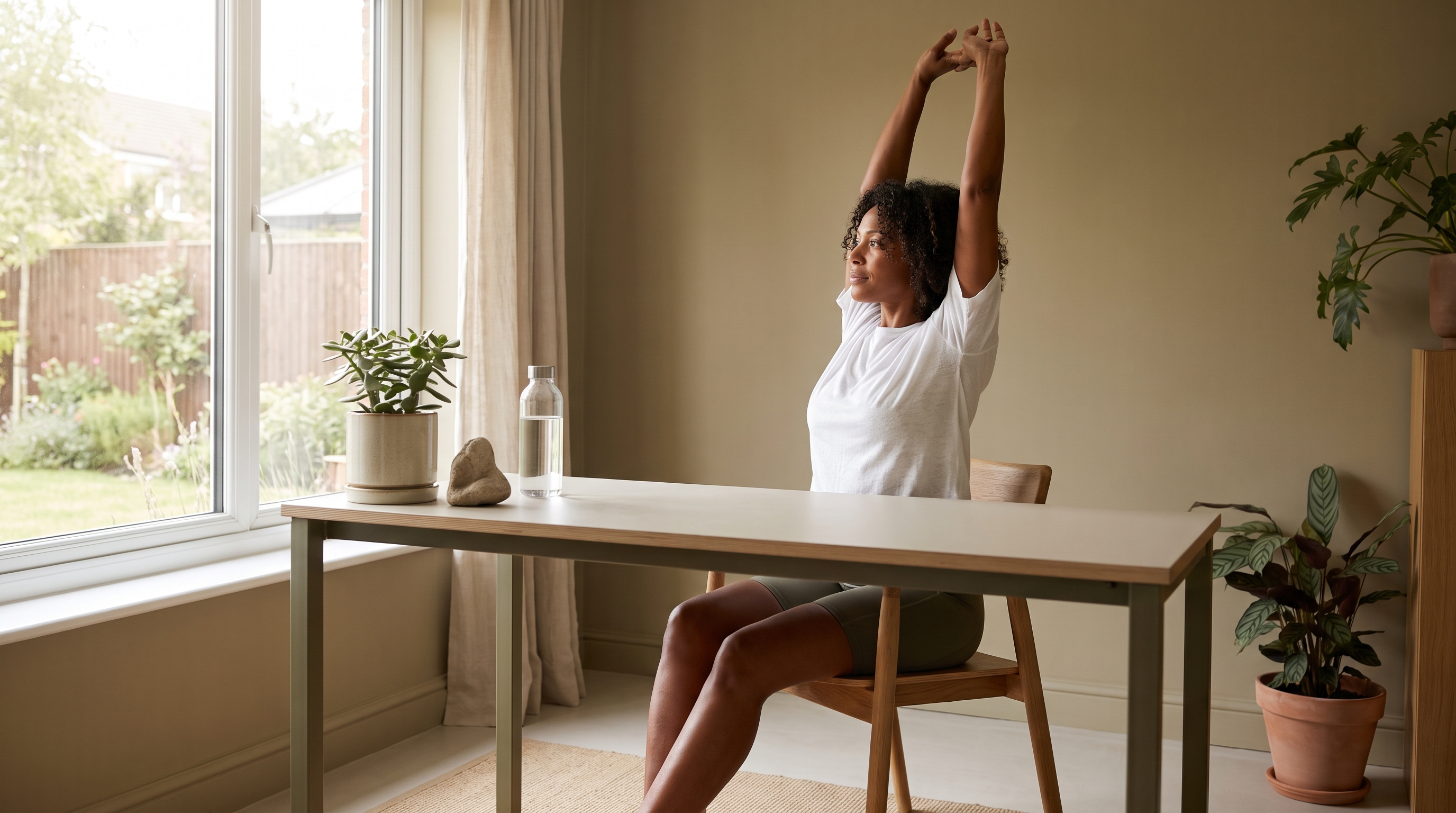
Release Tension Naturally
Move With Ease Again
Turning a Stiff Desk Day Into a Better One
The simplest place to start is one stretch, done at the same point every hour, rather than waiting until you feel stiff enough to need it.
A neck tilt, a shoulder roll or a standing stretch while you wait for coffee to brew is enough to begin, and the habit tends to grow once it feels normal rather than forced.
Nord Fascia can sit alongside that habit, giving you a guided plan and trackers to keep the routine visible instead of relying on memory alone.
FAQ
Short sessions spread through the day, such as two minutes every hour, tend to work better than one long session because tightness builds back up quickly after sitting. Even a handful of breaks across an eight-hour day adds up over a working week.
They do not fix posture on their own, since posture is shaped by repeated habits over months, not a single stretch. Regular movement breaks give your body more practice at holding an upright position, which is a step toward change rather than an instant one.
Attaching stretches to something you already do, like a phone call or a coffee break, removes the need to remember a separate task. A reminder or a guided plan, such as the sessions inside Nord Fascia, also takes the memory work off your plate.
No - the body responds to the movement you give it now, not only to the movement you gave it in the past. Starting with a couple of simple stretches today is a reasonable first step, whatever your sitting history looks like.
Share this post