How To Train Fascia: A Beginner's Path To Moving Easier
By:Author:Nord Fascia Editorial
Updated on:October 23, 2026

- Does Training Fascia Actually Loosen Anything?
- Guided Fascia Training Versus Static Stretching Alone
- Why a Short Daily Habit Beats an Occasional Deep Session
- Who Needs to Adjust Fascia Training and How
- Making Fascia Training Fit a Week That's Already Full
- No, Fascia Training Won't Melt Fat From One Area
- Building a Fascia Training Habit With Nord Fascia
- Turning a Few Minutes of Fascia Work Into a Routine
Training fascia means moving the connective tissue that wraps your muscles with slow, repeated motion so it stays supple instead of sticking together. It is not a single exercise, it is a pattern you repeat often enough that your body stops treating stiffness as normal.
Fascia responds to gentle, varied loading over time, not to force. Most people were never taught this, which is why so many just stretch the same two muscles and wonder why nothing changes.
This article covers whether training fascia actually works, how it compares with foam rolling and stretching, who needs to adjust it, and how to make it a normal part of a busy week.
Does Training Fascia Actually Loosen Anything?
Fascia is a web of connective tissue that surrounds muscles, and it can thicken or stick to nearby layers when it is not moved through a full range regularly. Slow, repeated movement through that range encourages the layers to glide against each other again instead of staying glued in place.
Here is the honest arithmetic: if you do five minutes of guided fascia movement a day, that is 35 minutes a week, compared with zero if you wait for an occasional long stretch session once a month. Thirty-five short minutes spread across seven days gives your tissue seven separate chances to adapt, rather than one.
That does not mean instant looseness. It means repeated, gentle input, which is the only mechanism fascia actually responds to.
Guided Fascia Training Versus Static Stretching Alone
Both approaches aim to ease stiffness, but they ask different things of your day and your body. Here is how they stack up against each other on the points that actually matter when you are deciding what to start.
| Factor | Guided Fascia Training | Static Stretching |
|---|---|---|
| Time per session | 5 to 10 minutes | 15 to 20 minutes |
| Movement variety | Multiple directions | Usually one angle |
| Equipment needed | None required | None required |
| Easiest to repeat daily | Yes, short sessions | Often skipped |
| Best suited for | Whole-body stiffness | One tight muscle |
Neither one is wrong. The difference is mostly about which one you will actually keep doing on a Tuesday evening when you are tired.
Why a Short Daily Habit Beats an Occasional Deep Session
An occasional deep stretching class or a long foam-rolling session can feel productive, but if it only happens once a month, the tissue has weeks to settle back into its old pattern. A short daily habit, even five minutes, keeps sending the same gentle signal before stiffness has a chance to rebuild.
Adherence is the whole game here. A routine you do nine times out of ten weeks beats a harder one you do twice and then abandon.
This is why the easier, shorter route usually wins over time, not because it is more powerful in a single session, but because it survives contact with a real week.
Who Needs to Adjust Fascia Training and How
Beginners With No Routine Yet
Start with two or three minutes a day rather than a long session, and pick one area, like the hips or shoulders, before adding more. The goal in week one is just showing up, not covering the whole body.
People With Packed Schedules
Short guided sessions fit into gaps most people already have, like waiting for the kettle or during a phone call. Three minutes done consistently beats a fifteen-minute block you keep postponing.

Older Adults or Anyone With Joint Stiffness
Move slower and reduce the range at first, building it up gradually rather than pushing into discomfort. If pain is sharp, new, or does not ease with rest, speak to a clinician before continuing.
Anyone Returning After a Long Break
Treat the first week as a reintroduction, not a restart from where you left off. Shorter, gentler sessions rebuild the habit faster than trying to match an old routine straight away.
Making Fascia Training Fit a Week That's Already Full
The easiest way to keep a fascia habit alive is to attach it to something you already do, like brushing your teeth or making coffee. That removes the decision-making and turns it into a small automatic step.
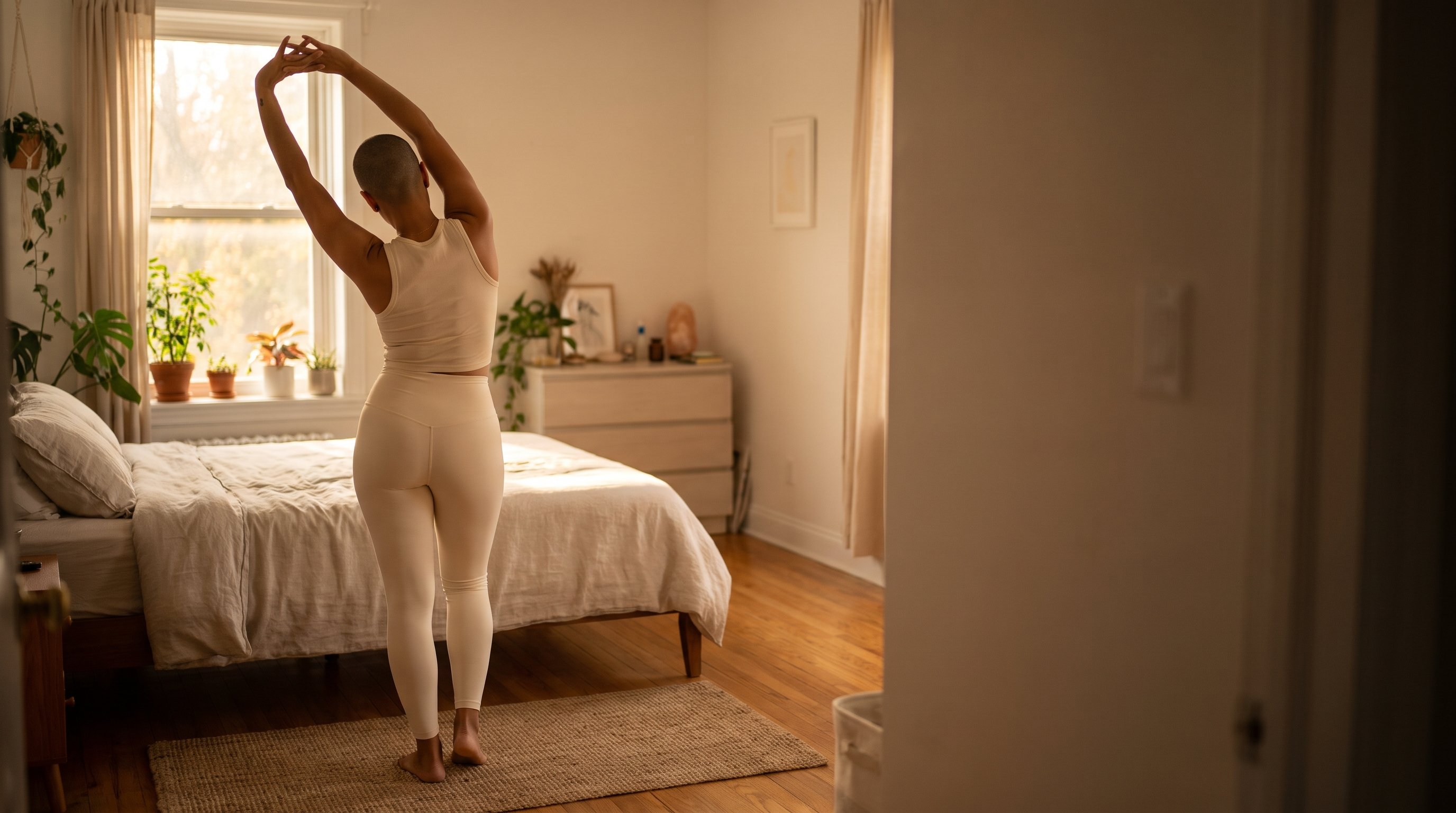
This is where a structured plan helps, because it tells you exactly what to do for the next five minutes instead of leaving you to guess. Nord Fascia lays out short guided sessions and daily trackers so the habit has a clear home in your day rather than depending on motivation alone.
Once the routine has a fixed slot, it stops competing with everything else on your list.
No, Fascia Training Won't Melt Fat From One Area
The body does not let you choose where it changes shape, and fascia work is no exception. Moving the tissue around your midsection will not selectively reduce fat there, no matter how targeted the exercise looks.
What fascia training can realistically do is help the area move and feel more comfortable, which often makes posture and movement look more at ease over time. That is a different promise than reshaping one body part, and it is the honest one.
Anyone promising overnight or localised results on fascia specifically is skipping the arithmetic of how tissue actually adapts.
Building a Fascia Training Habit With Nord Fascia
Starting a fascia habit from scratch usually fails for one simple reason: there is no plan, just good intentions. Nord Fascia removes that gap with hundreds of short guided exercise sessions built around fascia release, mobility and easing stiffness, so you are never deciding what to do next.
The app also includes daily habit trackers for things like hydration and step goals, lifestyle challenges to nudge small changes, and a specialist-curated article library to keep you informed along the way. None of it requires a gym, a restrictive diet, or an exhausting workout schedule.

Release Tension Naturally
Move With Ease Again
Turning a Few Minutes of Fascia Work Into a Routine
The best time to start is not Monday or next month, it is the next five free minutes in your day. Pick one short movement, do it today, and repeat it tomorrow before worrying about building a whole routine.
Nord Fascia can carry the planning side once you are ready for more structure, but the habit itself starts with one small session you actually finish.
FAQ
It depends on consistency more than intensity, since short daily sessions add up faster than occasional long ones. Most people judge it by whether movement feels easier day to day, not by a fixed date.
Stretching is one tool, but fascia training usually involves slower, more varied movement through multiple directions rather than one static hold. Both can help, but they are not identical.
Start with two or three minutes instead, since the point is repetition, not duration. A short session done daily beats a longer one that keeps getting skipped.
Most people quit when the routine has no fixed slot and depends on remembering it each day. Nord Fascia's guided sessions and trackers give the habit a clear place in the day, which is often what keeps it going past the first few weeks.
Share this post