Leg Mobility Exercises: A Calm Routine Stiff Legs Actually Need
By:Author:Nord Fascia Editorial
Updated on:October 23, 2026
- No, You Cannot Pick Which Leg Muscle Loosens First
- How Mobility Work Actually Loosens Stiff Joints
- What Decides Whether Your Legs Actually Feel Looser
- A Simple Week of Mobility Work to Copy
- Working Mobility Into a Day That's Already Full
- What a Realistic Timeline Looks Like for Legs
- Mistakes That Quietly Undo Progress
- Building Mobility Into Nord Fascia
- Making Looser Legs Part of an Ordinary Routine
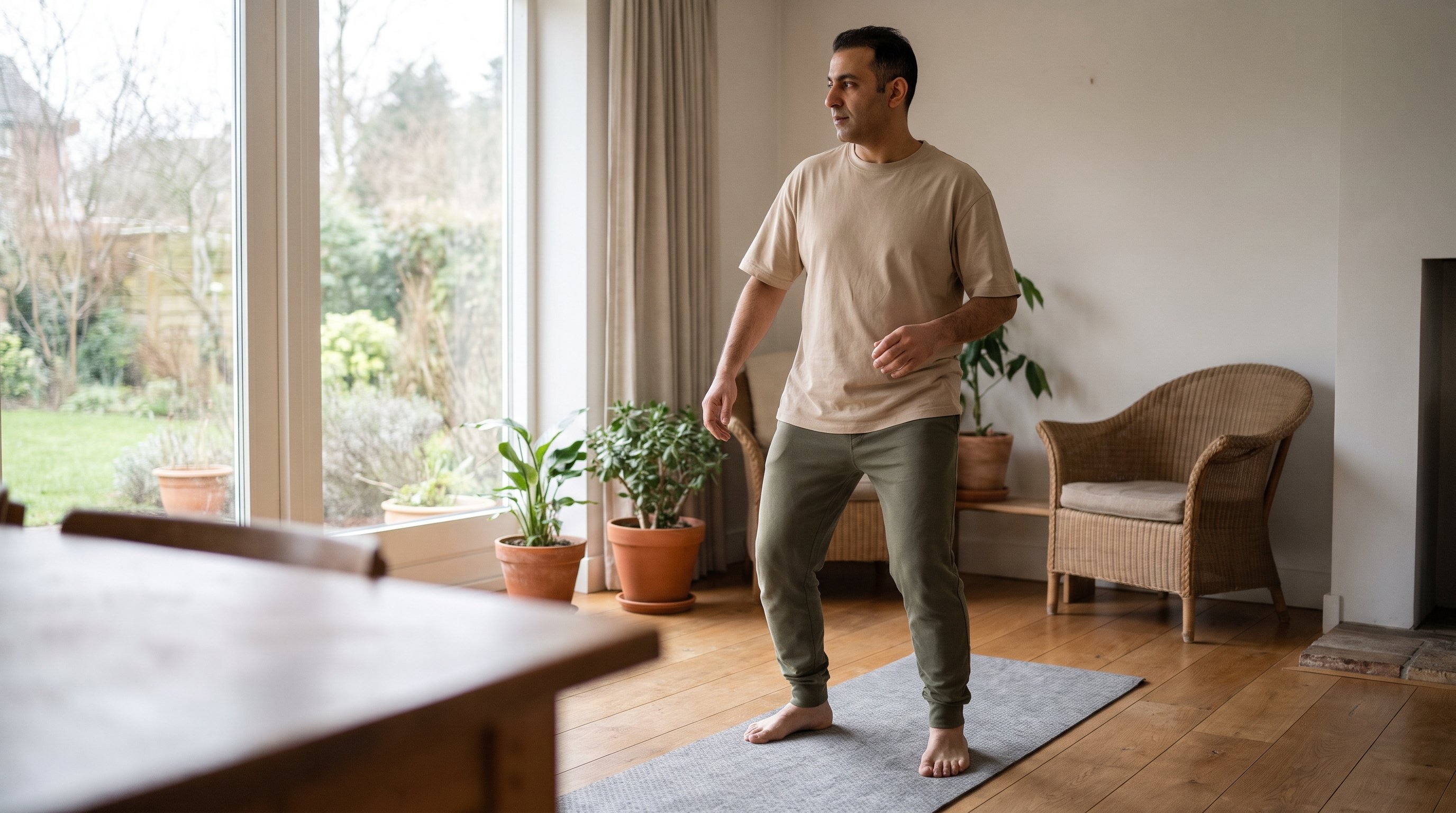
Leg mobility exercises work by moving your hips, knees and ankles through their full range on purpose, a few minutes most days, so the tissue around those joints stops feeling locked up.
Legs stiffen for a boring reason: long hours sitting or standing in the same shape train the body to expect that shape, and the fascia and muscle around your joints adapt to whatever position you repeat most.
This piece covers the myth worth dropping, the two things actually happening inside your legs when mobility work helps, what changes the result, a sample week, where this habit tends to break down, and how a guided plan can keep it going.
No, You Cannot Pick Which Leg Muscle Loosens First
A lot of people start mobility work hoping to loosen one exact spot, maybe the outer hip or the back of one knee, and nothing else.
That is not how the body works. Fascia and muscle in the legs are connected across the whole limb, so movement that loosens your hip also pulls on tissue down through your thigh and calf.
The honest answer is that these exercises improve how the whole leg moves together, not one isolated patch, and that is actually the more useful outcome since stiffness rarely stays in one place anyway.
How Mobility Work Actually Loosens Stiff Joints
Two separate things happen when you work through a routine, and both matter for different reasons.
Moving Joints Through Full Range Signals Safety
When a hip or ankle moves through its complete range repeatedly, the nervous system stops bracing against that movement as if it were dangerous, which is often what makes a joint feel tight in the first place.
Repeated Movement Encourages Fascia to Glide
Fascia around your leg muscles is built to slide against neighbouring layers, and slow controlled movement through a joint encourages that sliding instead of letting layers stay stuck in one position all day.
Neither change happens from one session, but both respond to movement repeated often, which is why consistency matters more than intensity here.
What Decides Whether Your Legs Actually Feel Looser
Three things separate people who notice a real difference from people who do the same moves and feel nothing change.
The Factors That Matter Most
- How often you move, not how hard - five minutes daily beats one long session a week because the nervous system needs repeated, low-effort signals.
- Whether you cover hip, knee and ankle, not just one - legs move as a chain, so skipping the ankle while only working the hip leaves part of the pattern untouched.
- How long you sit between sessions - hours of uninterrupted sitting can undo some of what a short routine builds, so breaking sitting up matters almost as much as the routine itself.
Get those three right and the same handful of moves tend to go further than a longer routine done carelessly.
A Simple Week of Mobility Work to Copy
Here is one way to spread these exercises across a normal week without it taking over your evenings.
A Week You Can Copy
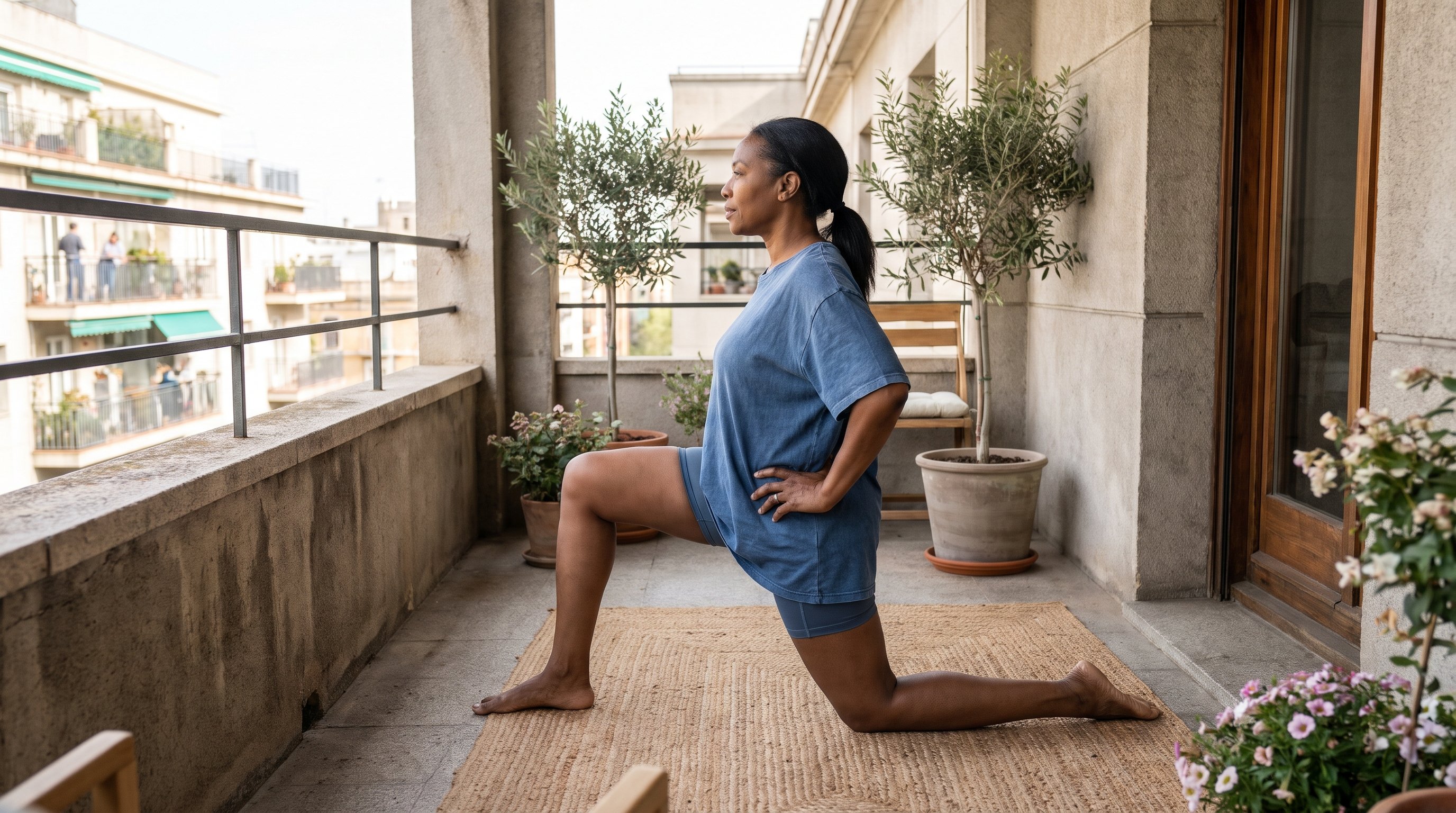
- Monday and Wednesday - standing hip circles, ankle rolls and a slow walking lunge sequence, around five minutes.
- Tuesday and Thursday - kneeling hip flexor stretch on each side plus calf raises through a full range, around five minutes.
- Friday - a slightly longer session combining everything from the week, ten minutes.
- Weekend - one short session, whichever moves felt best, kept deliberately easy.
Nothing here needs equipment or a gym floor, just enough space to stand and shift your weight through a few directions.
Working Mobility Into a Day That's Already Full
The easiest way to keep this going is to attach it to something you already do, right after brushing your teeth, before a shower, or during the first ad break of whatever you watch in the evening.
That removes the decision of when to fit it in, which is usually the actual barrier, not the movements themselves.
This is where Nord Fascia fits in for a lot of people: short guided video and audio sessions mean you are not guessing which moves to do or for how long, you just press play and follow along.
If a particular leg joint stays painful rather than just stiff, or pain shows up during ordinary walking, it is worth speaking to a clinician before pushing further with mobility work.
What a Realistic Timeline Looks Like for Legs
Expect the first noticeable change to be about ease, not flexibility: getting up from a chair feels less stiff, or walking up stairs feels a bit less effortful.
That tends to show up before any visible change in how far a joint can move, and it is easy to miss if you are watching for the wrong signal.
Most people who quit do it in the first couple of weeks, right when the routine still feels like effort and before it has become automatic, so the goal early on is just showing up, not feeling a dramatic shift.
Mistakes That Quietly Undo Progress
Only Working One Joint
Spending all your time on the hip and ignoring the ankle leaves a gap in the chain; rotate through hip, knee and ankle across the week instead of fixating on one.
Treating It Like a Stretch-Till-It-Hurts Contest
Pushing into sharp pain teaches the nervous system to brace harder, which works against the whole point; controlled, comfortable range beats forced range every time.
Doing One Long Session and Calling It Done
A single 30 minute session on a Sunday does not carry the same signal as five minutes most days; frequency is doing most of the work here.
Ignoring How Much You Sit
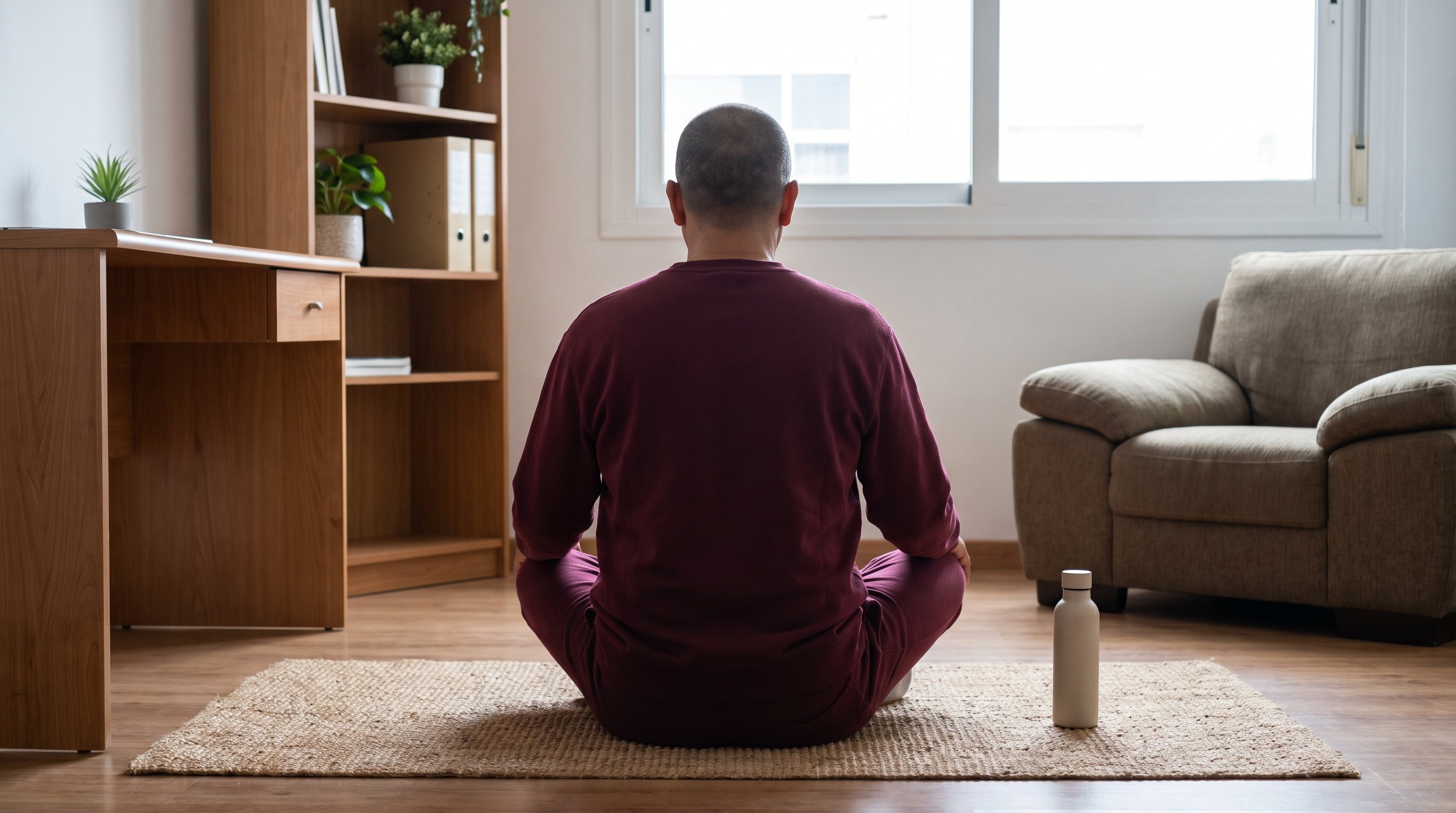
Hours of sitting between sessions can quietly cancel progress, so standing up and shifting position every so often matters alongside the dedicated routine.
Expecting a Straight Line
Some days will feel looser than others for no clear reason, and that is normal rather than a sign the routine stopped working.
Building Mobility Into Nord Fascia
Nord Fascia brings these routines together with daily habit trackers, so you can see whether you actually moved today instead of relying on memory.
The app's guided plans are built around hundreds of short sessions, which means the routine can flex around your week instead of asking you to carve out a long block of time you do not have.
There are no restrictive diets or gym requirements involved, just short guided sessions plus progress tracking and lifestyle challenges that nudge the habit along once the first fortnight is behind you.
Release Tension Naturally
Move With Ease Again
Making Looser Legs Part of an Ordinary Routine
Pick one moment today, right before or after something you already do without thinking, and attach five minutes of movement to it.
That single decision matters more than finding the perfect set of exercises, since consistency is what actually changes how your legs feel over time.
Nord Fascia can take the guesswork out of which moves to do and when, but the habit itself starts with you pressing play today rather than waiting for a better week.
FAQ
A handful, usually five or six moves covering hip, knee and ankle, is enough to work through in five to ten minutes a day.
No, these routines change how comfortably your joints move, not the underlying shape or structure of your legs.
Yes, and it matters more for people who sit most of the day, since short movement breaks plus a daily routine counter some of what prolonged sitting encourages.
Pick the routine back up without trying to make up for lost days; Nord Fascia's tracker is there to help you notice the gap and restart rather than to punish you for missing it.
Share this post